
How the educational project helps people find a new profession
The educational component of the joint project with Mercy Corps, funded by the UK government, has reached its final stage. This is an important step for the development of the communities’ potential in eastern Ukraine, as our efforts are aimed not only at humanitarian support but also at increasing the resilience of people in times of war.
Thanks to the educational component, 190 people who lost their jobs due to the war have already completed their training and acquired new professions that match their personal interests and needs. Another 13 participants are finishing their courses this month. By the end of the year, all participants of our project will be able to start working with their new qualifications.
“The educational direction of our project, implemented together with our partners from Mercy Corps, has covered 203 participants who found themselves without work. These are people who seek new opportunities for self-realization and support. Among the specialties chosen by the participants are SMM managers, accountants, beauty industry specialists, and Nordic walking instructors. The training helps not only acquire practical skills but also opens up opportunities for self-employment or starting a business,” emphasized the Head of Educational Programs at the NGO “Responsible Citizens,” Olena Bieholipteva.
Education is a key element of our program that allows people to feel more confident about their future. We believe that providing knowledge and skills is not only assistance here and now but also an investment in the development of communities capable of recovery and growth even in times of crisis.


Більше новин
-
 “My journey towards change began quite literally with Nordic walking,” says Olena Rumyantseva, a teacher from Kharkiv
“In May, I was fortunate to attend a training session led by Olena Bieloliptseva, the coordinator of educational programs at the NGO ‘Responsible Citize...
-
 NGO “Responsible Citizens” participates in HORIZONTAL 5.0 Festival “Women’s Voice: From Idea to Action”
Participants gathered to discuss current social challenges, strengthen cooperation, and define ways to effectively support women in crisis conditions.
-
 ‘Responsible Citizens’ Board Head joins mental health events led by Olena Zelenska
Olga Kosse participated in events dedicated to World Mental Health Day in Kyiv.
-
 “Responsible Citizens” and Acted Launch a Project Providing Cash Assistance to People Affected by the War
The NGO “Responsible Citizens,” in partnership with Acted, is launching a project to provide cash assistance to people affected by the war and forced displacement. The project is implemented with the support of the Ukraine Humanitarian Fund (UHF) as part of the UNITY — Joint Cash Assistance Programme in Ukraine consortium.
-
 Psychosocial Support for Children Affected by the War in Zaporizhzhia Oblast
The activities were carried out within the framework of the UNICEF project in Ukraine “Strengthening Community Capacity to Deliver Essential Protection and Resilience Services in Kharkiv, Donetsk, Dnipropetrovsk, and Zaporizhzhia Oblasts,” implemented by the NGO “Responsible Citizens” with the support of the Government of the United States of America.
-

-
 Career development training enrollment open
The NGO “Responsible Citizens,” in partnership with Mercy Corps and with support from the UK government, is offering opportunities for those seeking new...
-
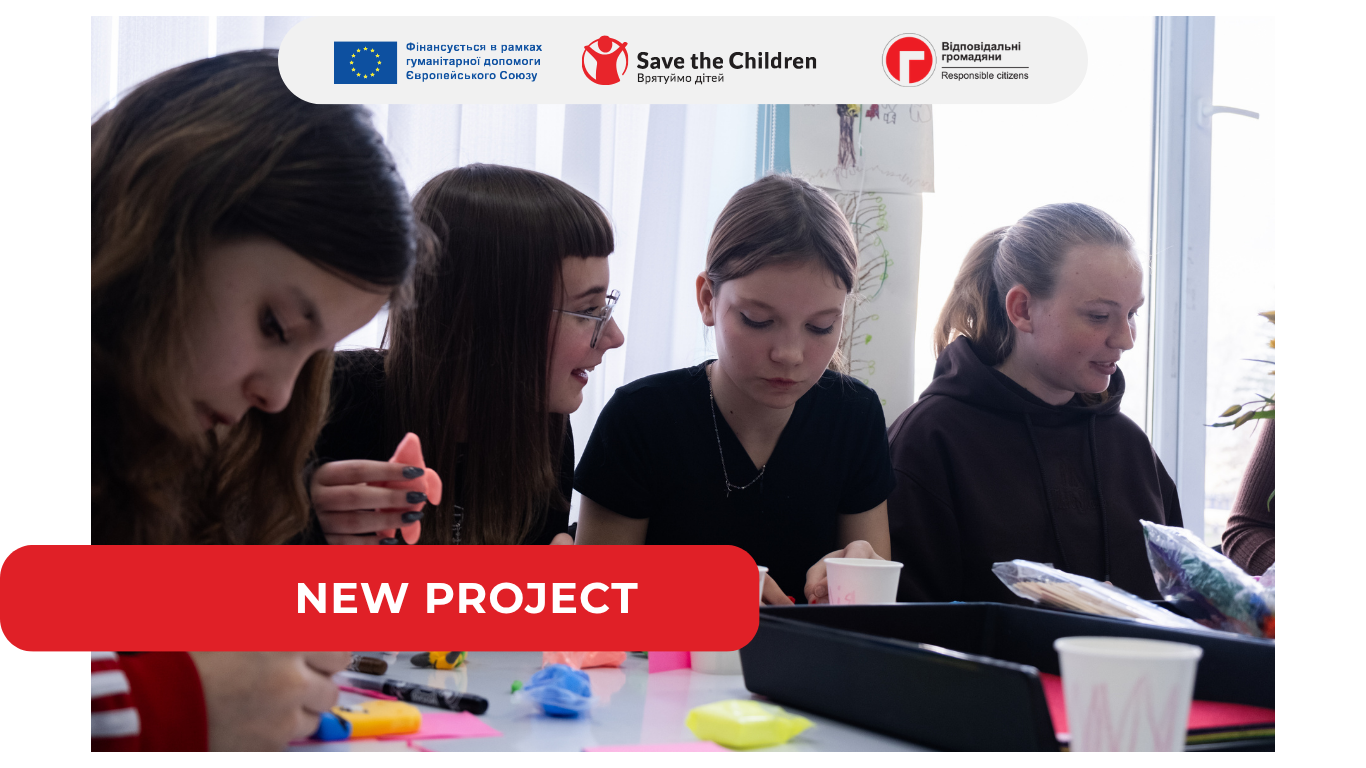 NGO “Responsible Citizens” launches the implementation of the project “Expanding Access to Quality Education and Child Protection Services for Conflict-Affected Children and Their Families”
The project is being implemented in partnership with Save the Children and is funded by the European Union.