
Dnipropetrovsk region: Systematic support for children and families in a frontline area
The teams of the NGO Responsible Citizens work in areas where the social burden increases every day. This is where Child-Friendly Spaces and mobile psychosocial support teams operate most actively. In the first half of 2025, nearly 10,000 children and their families received professional support.
The project is implemented by Responsible Citizens in partnership with UNICEF Ukraine and with the support of the Government of the United States of America. Its goal is not one-time aid but systematic support through psychological, social, corrective services and individual case management.
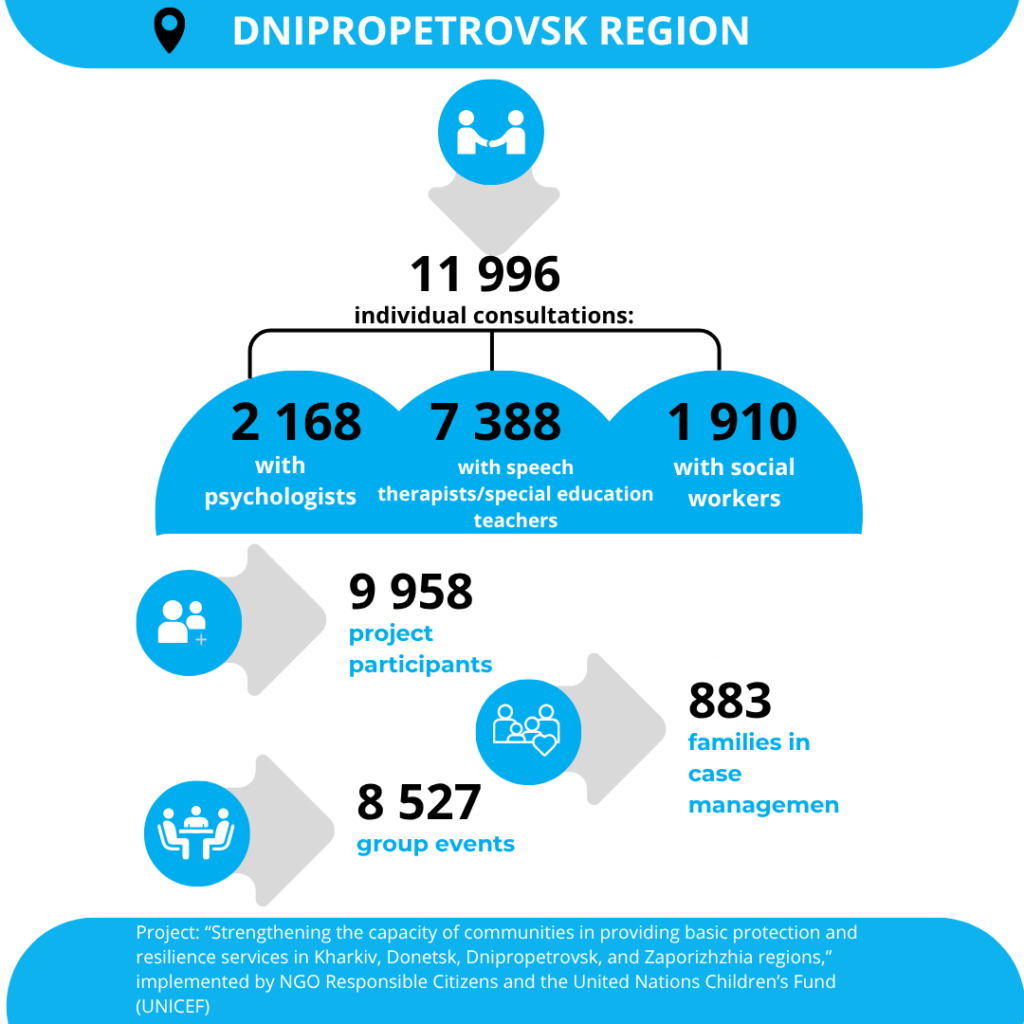
Results from January to June 2025 in Dnipropetrovsk region:
- 883 cases of individual social support (case management);
- 8,527 group sessions;
- 11,996 individual consultations, including:
— 7,388 sessions with speech therapists and special education professionals;
— 2,168 consultations with psychologists;
— 1,910 consultations with social workers.
“We see it every day: even relative safety is not enough for recovery without consistent support. Our task is not just to respond but to help systematically and steadily. To be there not only during a crisis, but day by day — with adaptation, emotional stabilization, speech development. That is what makes our team a real support for so many families,” says Alla Maslakhova, project coordinator in Dnipropetrovsk region.
Responsible Citizens work where support shapes the future. Because every child has the right not only to safety, but also to development and stability.
Більше новин
-
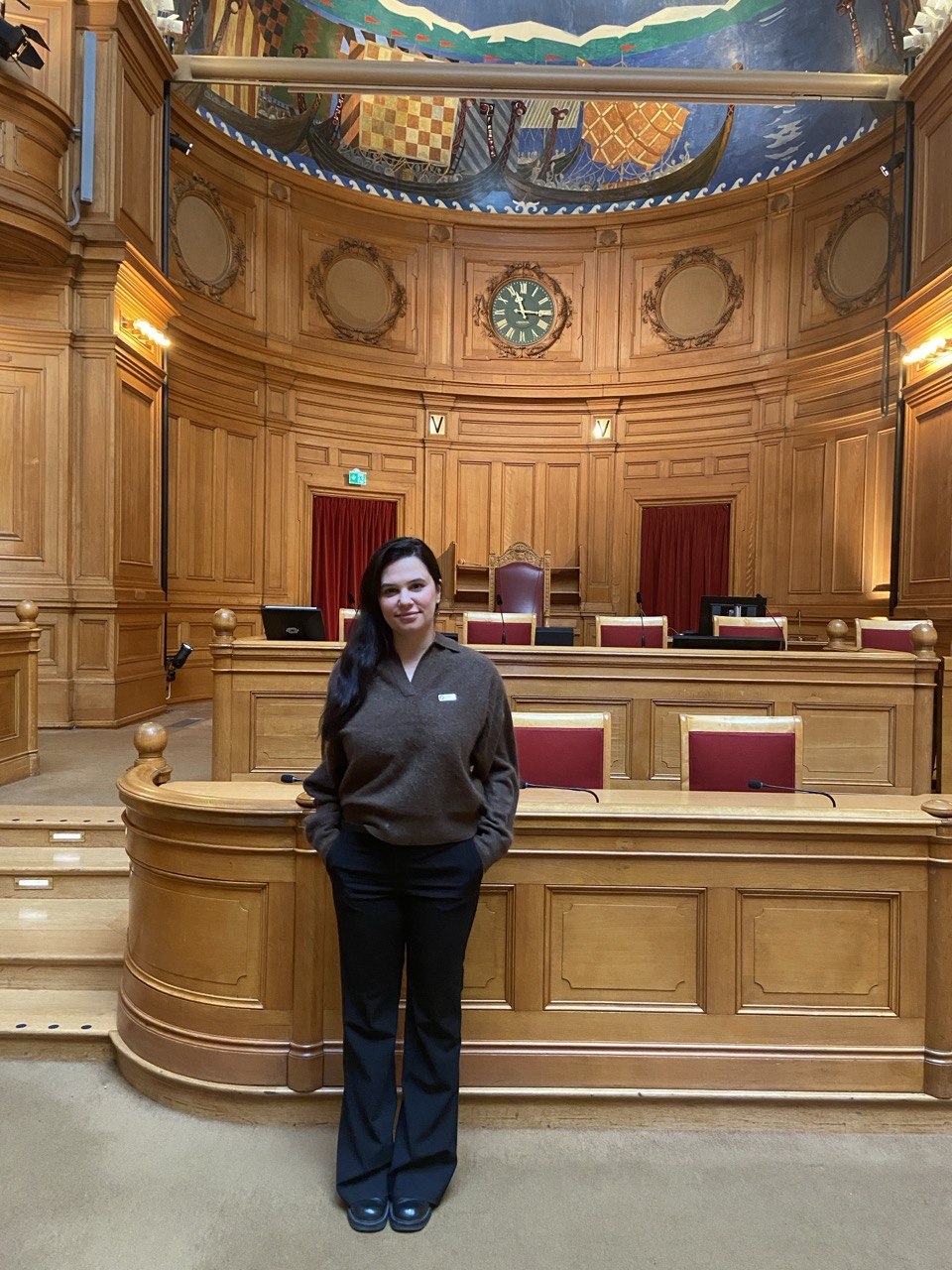 Olga Kosse at the Swedish Parliament: psychological support for children is about Ukraine’s future
The event was initiated by our steadfast partners at Rädda Barnen / Save the Children Sweden, who have consistently supported child protection and humanitarian response efforts in Ukraine over the years. Among the participants were members of the Swedish Parliament working on international development, human rights, and child protection issues: Gudrun Brunegård, Azra Muranovic, Carina Ödebrink and Marie-Louise Hänel Sandström.
-
 Alla Maslakhova, Project Coordinator of NGO “Responsible Citizens,” in a Special Edition of the “SPIU Podcast
What does responsibility look like in practice? What are the current trends in the civic sector? How do we provide support in frontline areas, what lessons have we ...
-
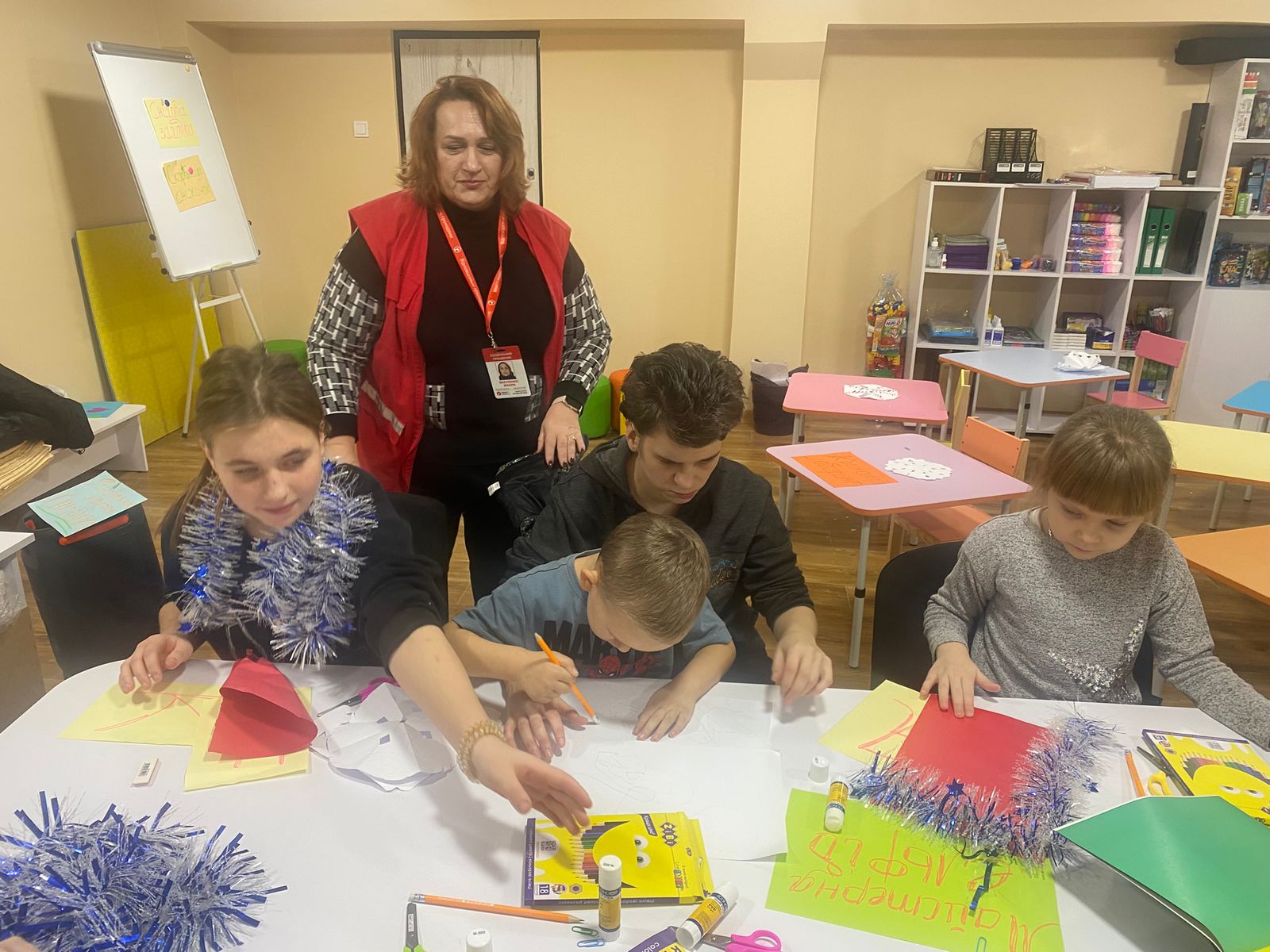 Play, Support, Care: How Child-Friendly Spaces Strengthen the Mental Health of Children and Parents
Psychosocial support is provided as part of UNICEF’s project “Strengthening Community Capacity to Provide Core Protection and Resilience Services in Kharkiv, Donetsk, Dnipropetrovsk, and Zaporizhzhia Regions,” implemented by Responsible Citizens NGO with support from the Government of the United States of America.
-
 Sent over 320 kg of Humanitarian Aid to the Kharkiv Region
The team at NGO “Responsible Citizens” continues to support those affected by the war, providing essential humanitarian aid. Thanks to the Nova Poshta Humanitarian ...
-
 Strength in unity: a family’s journey to find support in Zaporizhzhia
Free sessions with a psychologist, speech therapist, and art therapist, offered by the NGO “Responsible Citizens,” gave the family the support they desperately needed. These efforts helped the children adapt to their new circumstances, with little Bohdana making remarkable progress in her speech.
-
 Completion of soft skills and business skills training: new opportunities for educators and youth
NGO Responsible Citizens, in partnership with Mercy Corps and with financial support from the UK government, has successfully completed a series of training session...
-
 A meeting took place in Vienna between representatives of Ukraine’s civil society and Austria’s Foreign Minister Alexander Schallenberg
The international community is making a significant contribution to the development of civil society organizations in Ukraine, which are working in critical areas t...
-
 “Responsible Citizens” launch the work of the education experts group
The NGO "Responsible Citizens" held the first meeting of the interregional working group of educators, bringing together 20 specialists from various regions of Ukraine. The initiative was a response to the challenges faced by the education sector in times of war and aimed at finding effective solutions to overcome educational losses.