
Play, Support, Care: How Child-Friendly Spaces Strengthen the Mental Health of Children and Parents
Більше новин
-
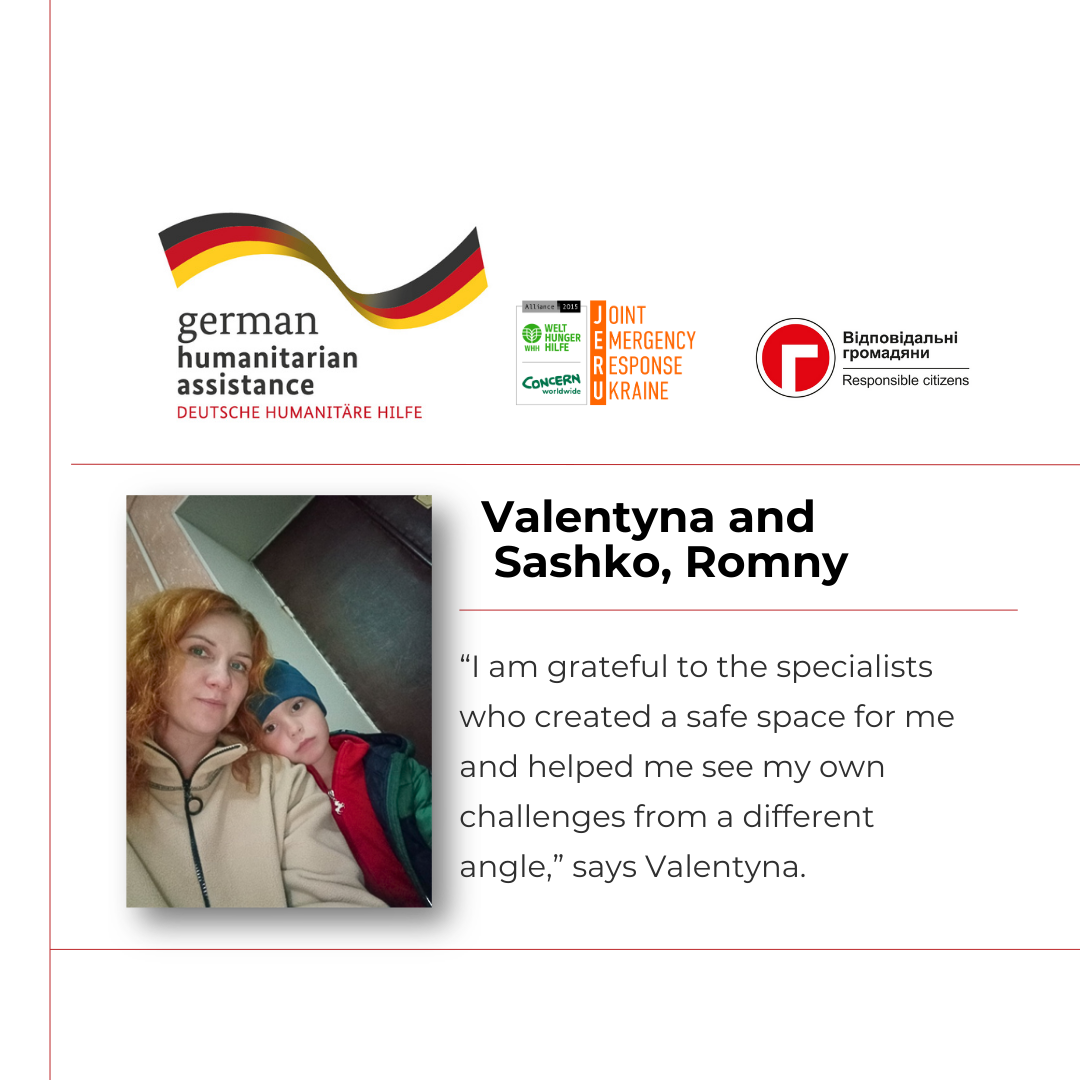 “I regained the ability to enjoy the little things,” — Valentyna, Romny
Since the beginning of autumn, our mobile teams of psychologists and facilitators have been visiting communities where people live under constant stress caused by the war and often have no access to professional support. This became possible thanks to the project implemented by the NGO “Responsible Citizens” in partnership with JERU – Joint Emergency Response in Ukraine, a joint initiative of Welthungerhilfe and Concern Worldwide — with financial support from the German Federal Foreign Office.
-
 Maryana from Kharkiv: How mobile teams of social workers help families overcome despair
Recently, Ukraine celebrated Social Worker’s Day. In recent years, social workers have been personally saving people from the heaviest burdens—disbelief, despair, a...
-
 Another 175 kg of aid sent to Kharkiv region: support that heals
Thanks to the cooperation between the NGO “Responsible Citizens” and the social initiative “Humanitarian Nova Poshta,” another 175 kg of psy...
-
 Career development training enrollment open
The NGO “Responsible Citizens,” in partnership with Mercy Corps and with support from the UK government, is offering opportunities for those seeking new...
-
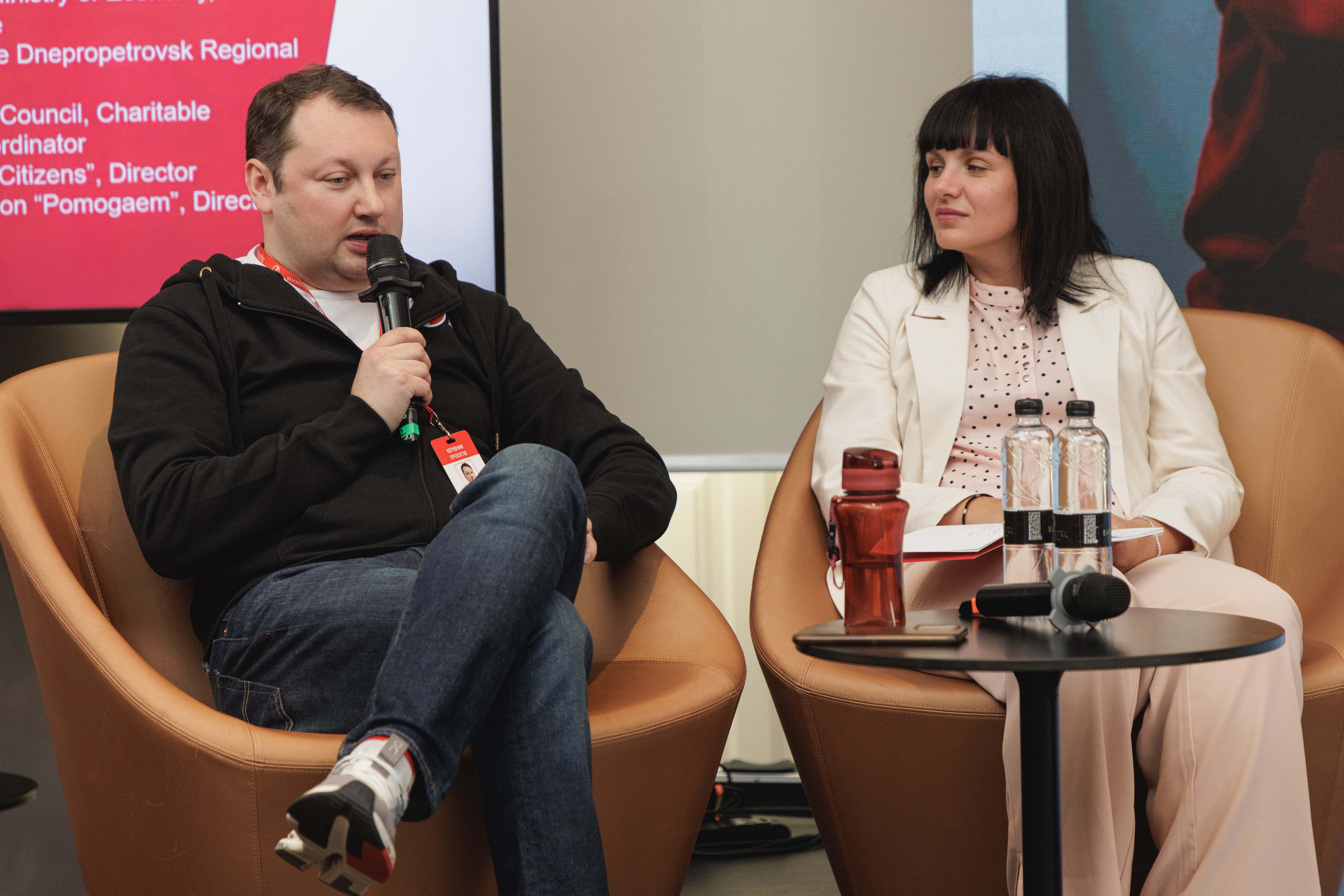 “People Must Be at the Center of Recovery”: Enrique Menendez on New Approaches to Supporting Communities
The Director of Projects and Programs of the NGO Responsible Citizens took part in the event “United for Recovery: A Resilient Civil Society — a Strong Ukraine” held in Lviv and organized by our partners from Mercy Corps.
-
 Aid that changed the life of a family from Druzhkivka: Arina’s story
Arina from Druzhkivka, Donetsk region, shares her story of how the financial assistance provided by the NGO “Responsible Citizens” became a lifesaving s...
-
 How the educational project helps people find a new profession
The educational component of the joint project with Mercy Corps, funded by the UK government, has reached its final stage. This is an important step for the develop...
-
 A cycle of mine safety classes for children continues in the Kharkiv region
These trainings became possible thanks to cooperation within the Child Protection Cluster, where one of the coordinators is Olena Khvatynets, project manager of the NGO "Responsible Citizens" in the Kharkiv region.