
Resilience Point in Prykolotne: How a Community in Kharkiv Region Is Strengthening Its Resilience Despite the War
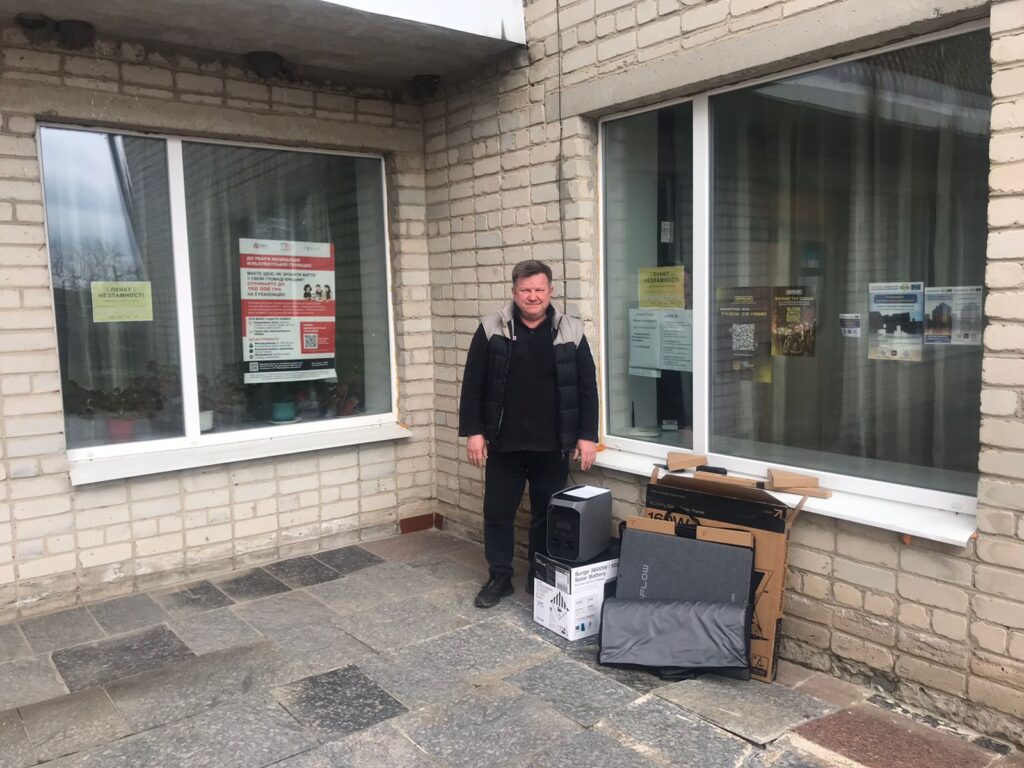

Volodymyr Petrovych Sitnikov lives in the village of Prykolotne in Kupiansk district, Kharkiv region, and works in the municipal sector. He remains at home, despite the frontline being very close. As he puts it simply: “I will hold on for as long as I can. It is hard to leave your home.”
The community endured seven months of occupation. Today, there is no regular public transport, and three agricultural enterprises are no longer operating. Around 500 residents live from one delivery of food supplies to the next. The roads and railway junction are under constant shelling.
When the opportunity arose to apply for a mini-grant, Volodymyr Petrovych and the community initially considered setting up a stop for a social bus. However, shelling quickly destroyed that plan—along with the bus stop itself. It became clear that any gathering place in a frontline community poses a risk. Moreover, transport no longer reaches the village.
“We realised that we needed to think differently, prioritising safety and people’s basic needs—those things that are essential in everyday life,” he explains.
A solution was found quickly. The most pressing challenges were power outages and the lack of communication. This is precisely what the community decided to address through the mini-grant programme.
“Electricity cuts happen all the time. People need to stay in touch with their families and loved ones. They need a place where they can always charge their phones and access the internet,” says Volodymyr Petrovych.
The idea quickly turned into action. Once confirmation was received that the grant had been approved, there was no delay. Equipment was purchased immediately, because every day mattered.
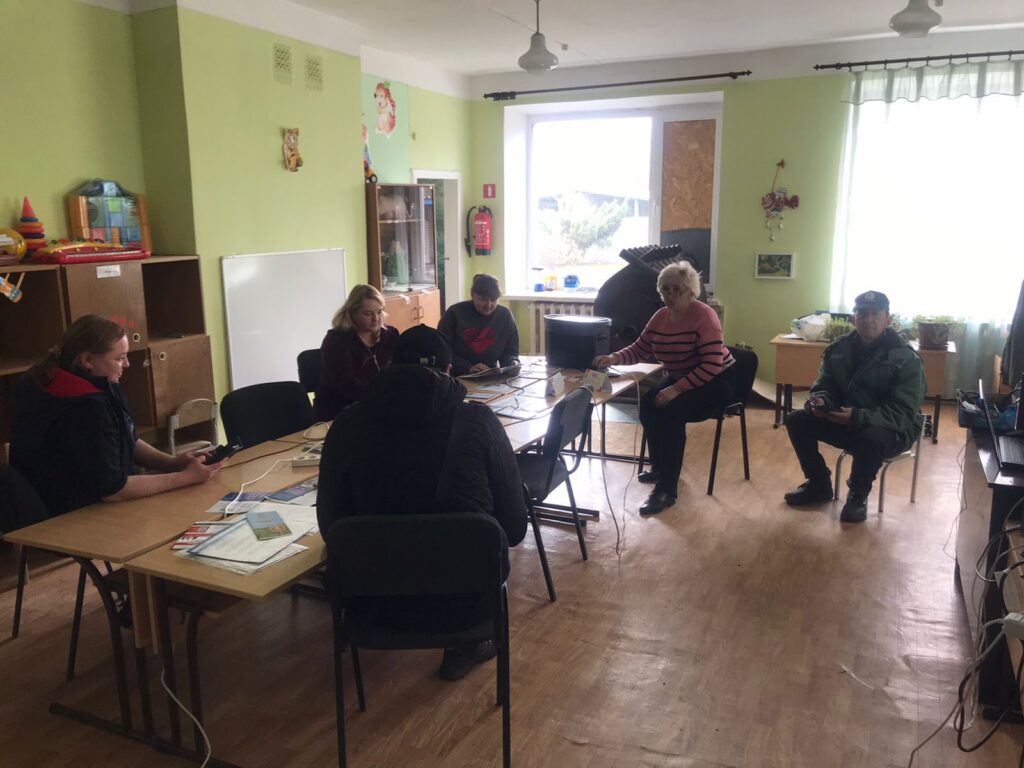
As a result, the community established a solar-powered resilience point where residents can charge their devices and access the internet even during emergency power outages.
“It helps enormously. We take the panels outside, they charge quickly, and the power lasts for a long time. Now, at least, there is some stability in knowing that communication will not disappear completely,” says Volodymyr Petrovych.
People come to the resilience point every day. With the arrival of spring, residents of Prykolotne have even begun planting vegetable gardens again, little by little, so they can grow their own food. Despite everything, people are doing their best to carry on and rebuild their lives, even in such difficult circumstances.
“People come to us all the time. Some need to charge their devices; others simply want to check whether there is a connection. It gives people peace of mind. We are deeply grateful for this support—it is truly felt here, on the ground,” Volodymyr Petrovych says sincerely.
The project is implemented by the NGO Responsible Citizens in partnership with JERU – Joint Emergency Response in Ukraine (Welthungerhilfe and Concern Worldwide), with financial support from the Ukraine Humanitarian Fund (UHF).
United Nations Office for the Coordination of Humanitarian Affairs / OCHA Ukraine
Більше новин
-
 Spaces, mobile teams, support: daily help for families in Kharkiv Region
Despite the daily challenges of war, a dedicated team of professionals in Kharkiv region continues to deliver essential social services to children and families. This work is part of the UNICEF Ukraine project “Strengthening community capacity to provide essential protection and resilience services in Kharkiv, Donetsk, Dnipropetrovsk and Zaporizhzhia regions,” implemented by the NGO "Responsible Citizens."
-
 NGO “Responsible Citizens” 10 Years
On this day ten years ago, our organization, Responsible Citizens, was founded in Donetsk. To be precise, it was on June 10, 2014, when the four founders first met ...
-
 Space of opportunities: how UNICEF and partners are saving children’s futures
“Mom, when are we going to the Space again?” — Sashko eagerly awaits each visit because it was there that he truly started speaking for the first time.
-
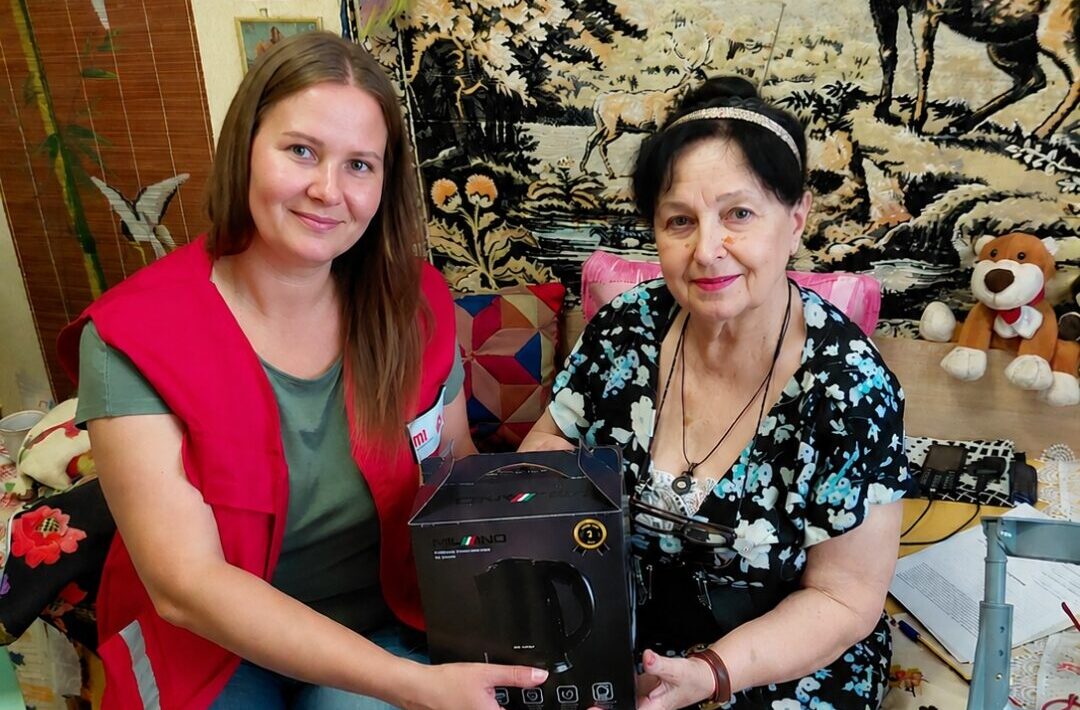 “You don’t have to face your problems alone”: how a case manager helps displaced people start a new life in their community
“I was also an internally displaced person at the beginning of the full-scale invasion, so I understand what it is like to find yourself in a completely different, unfamiliar environment. That’s why I know how important it is to feel that you are not alone, that someone cares about you and wants to help,” says Olha, a case manager with the NGO Responsible Citizens.
-
 Zaporizhzhia: first meeting of the coordination group on identifying community needs for social services
The NGO “Responsible Citizens” participated in the first meeting of the city coordination group established to identify the needs of residents of the Zaporizhzhia city territorial community under emergency or martial law conditions. The group includes representatives of relevant city services (education, healthcare, social protection) as well as non-governmental organizations.
-
 Safety for children in frontline communities: training in Kryvyi Rih
Daily air raid alerts, the risk of shelling, and constant uncertainty have become a reality for thousands of children living in frontline areas of Ukraine. To support their psychological resilience and provide practical safety knowledge, the NGO Responsible Citizens, with the support of @unicef_ukraine, is organizing a series of trainings in Child-Friendly Spaces.
-
 How Residents of Frontline Communities Assess their Readiness for a Possible Escalation
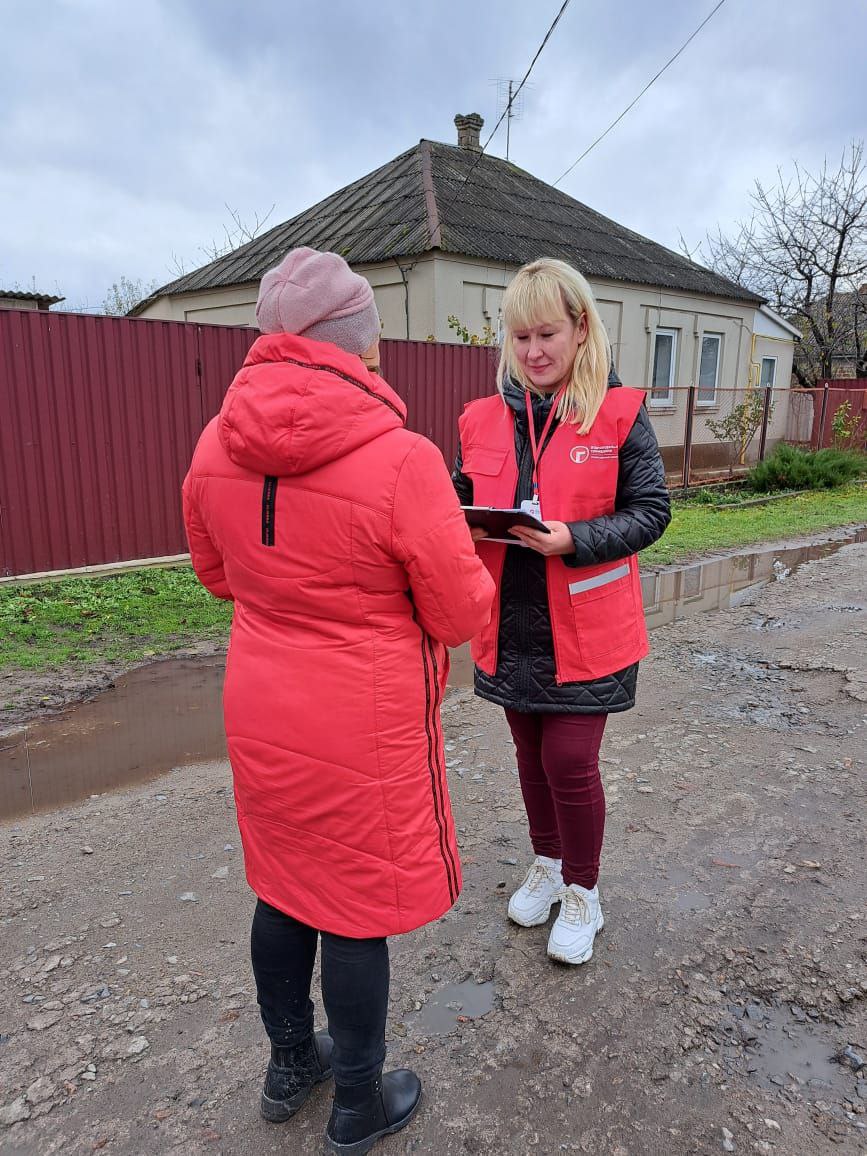
Our team conducted anonymous surveys on social media to better understand how prepared people from communities near the front line are for a potential escalation. More than 720 people took part. According to the survey results, 67% of respondents said they do not have the financial means to rent housing in case of evacuation.
-
 Announcement for Residents of the Hrunska Community, Okhtyrka District, Sumy Region
Pre-registration has begun for participation in the multi-purpose cash assistance program, implemented by the NGO “Responsible Citizens” in partnership with JERU (a joint initiative of international organizations Welthungerhilfe and Concern Worldwide), funded by the German Federal Foreign Office (AA).