
“It’s Like He Opened Up”: How Support Helped Slavik Find His Voice
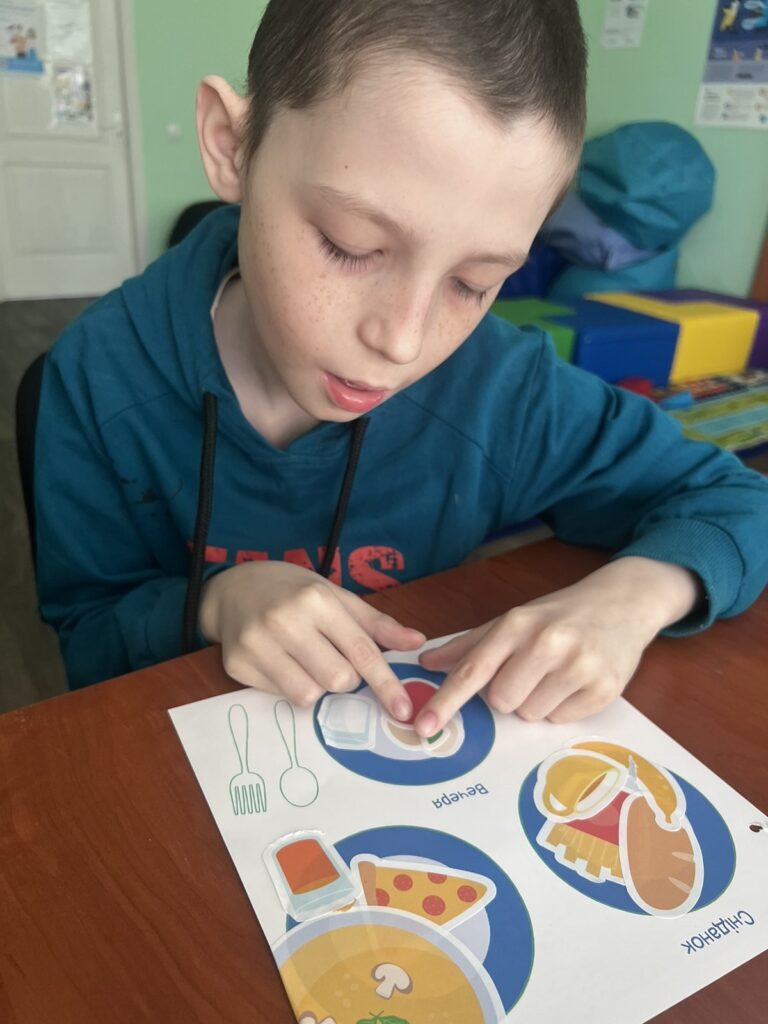
Slavik is 10 years old. He is in the first grade and has a disability. Just a few months ago, his communication was very limited: instead of words, he relied on gestures, individual sounds, and attempts to express his basic needs in whatever way he could. His mother, Olha, had learned to “read” her son without words and dreamed most of all that he would one day begin to speak.
Despite previous sessions with specialists, there had been little noticeable progress in his speech development. Things began to change after the family started attending our Child-Friendly Space.
The support process began with careful observation and a comprehensive assessment. It was important for the team to understand not only Slavik’s speech abilities but also his overall development: how he responded to instructions, what helped him engage with others, how long he could maintain attention, and what tended to overwhelm him.
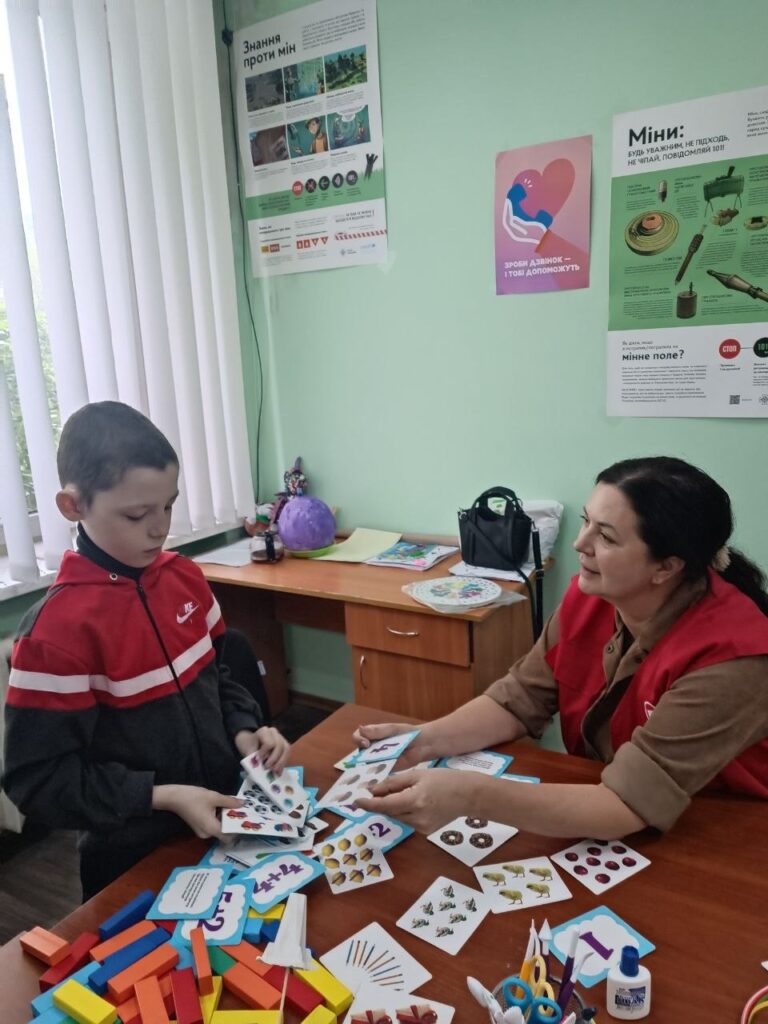
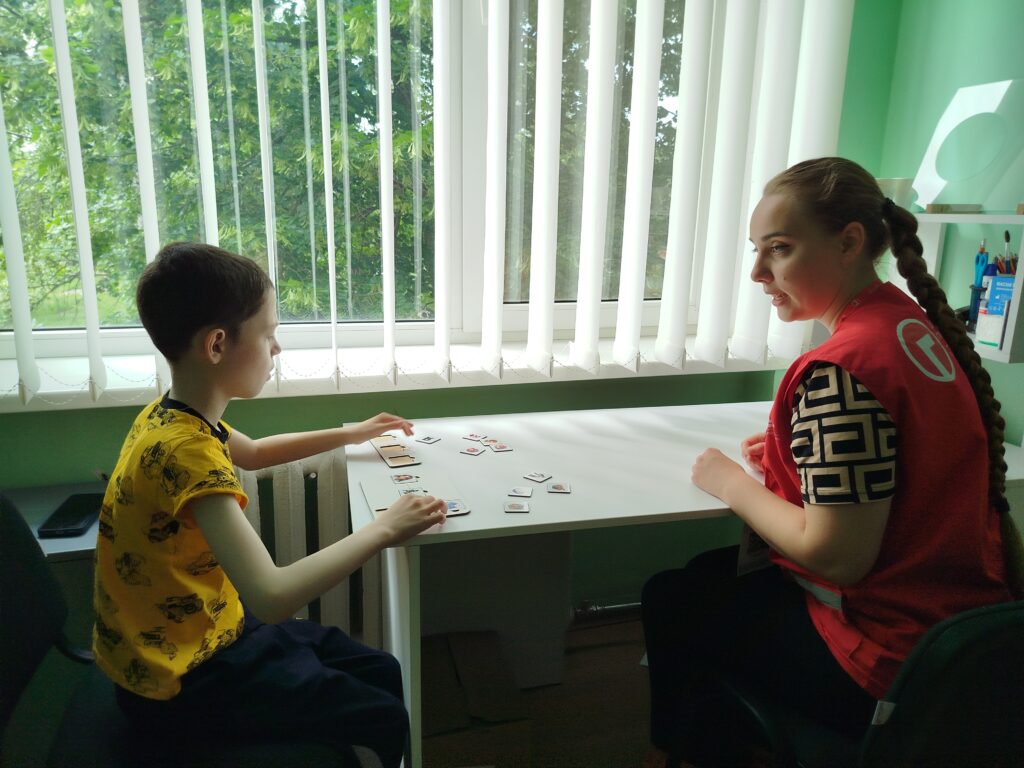
An inclusion specialist and a speech therapist/special education specialist joined his support plan. The approach was gradual and tailored to Slavik’s pace, with a clear structure and consistent repetition that helped him feel safe and secure.
One of the main challenges was his high level of physical activity and difficulty concentrating. At first, it was hard for Slavik to stay engaged in an activity even for a short period of time. To address this, the sessions were adapted through short tasks, frequent changes of activities, and a gradual increase in participation.
Changes became noticeable within the first three months. Slavik began using words to express his needs. Later, simple sentences appeared. Most importantly, speech became a tool for communication rather than isolated attempts to express himself. He started approaching adults more often, responding to others, and initiating interaction.
Olha says that what impresses her most is not only the appearance of words, but the overall change in her son’s wellbeing:
“It’s like he opened up. Now he can tell us what he wants to say, and that changes everything in our lives.”
It has also been important for the family to see how Slavik feels in the Child-Friendly Space. He looks forward to attending sessions and returns home calm and happy. For his mother, this is one of the clearest signs that he feels comfortable and safe there.
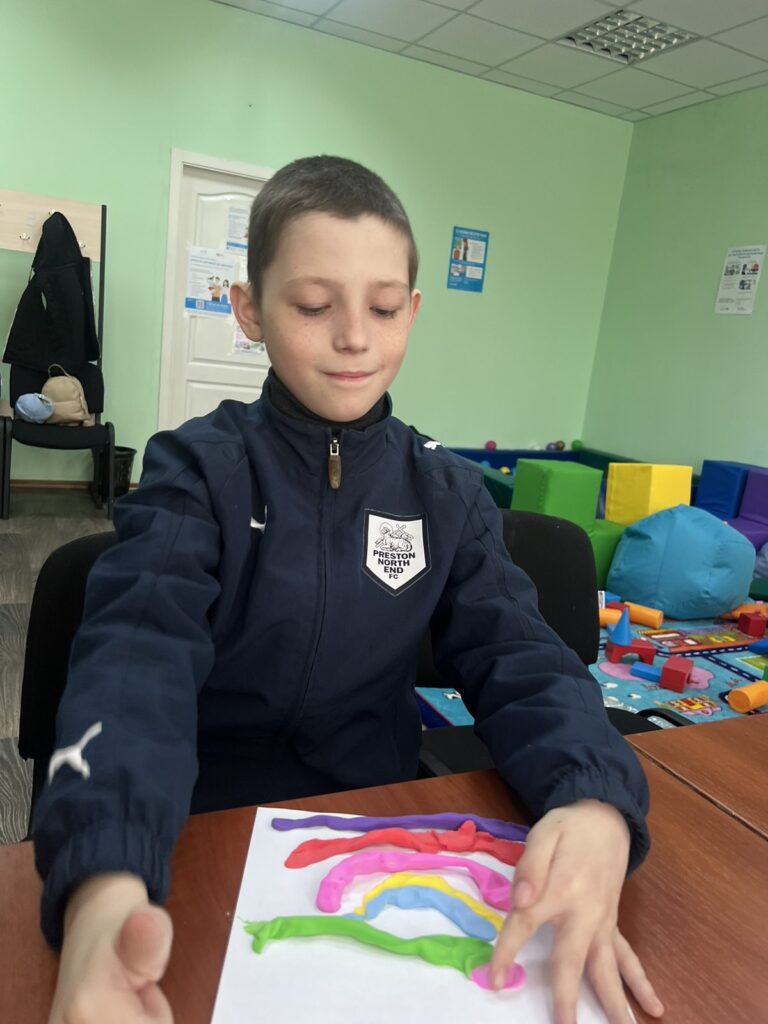
Slavik loves building with construction toys and modelling with clay. Through play, it is easier for him to interact with others, try new words, and reinforce newly acquired skills. These activities gradually build his confidence and willingness to communicate.
Group sessions also play an important role. During these activities, children and parents play, communicate, and complete simple tasks together. This creates a natural environment for developing social skills without pressure and through positive interaction.
For Olha, who is raising her son on her own, this support has become an important source of stability. She highlights the consistency of the approach, respect for her child’s pace, and the meaningful changes that have become part of their daily life.
Support is provided within the framework of the UNICEF project “Protection Services for the Most Vulnerable Children and Parents (or Their Caregivers) in Communities of Donetsk, Dnipropetrovsk and Zaporizhzhia Oblasts,” implemented by Responsible Citizens NGO with financial support from the Government of the United States and UNICEF Ukraine.
Більше новин
-
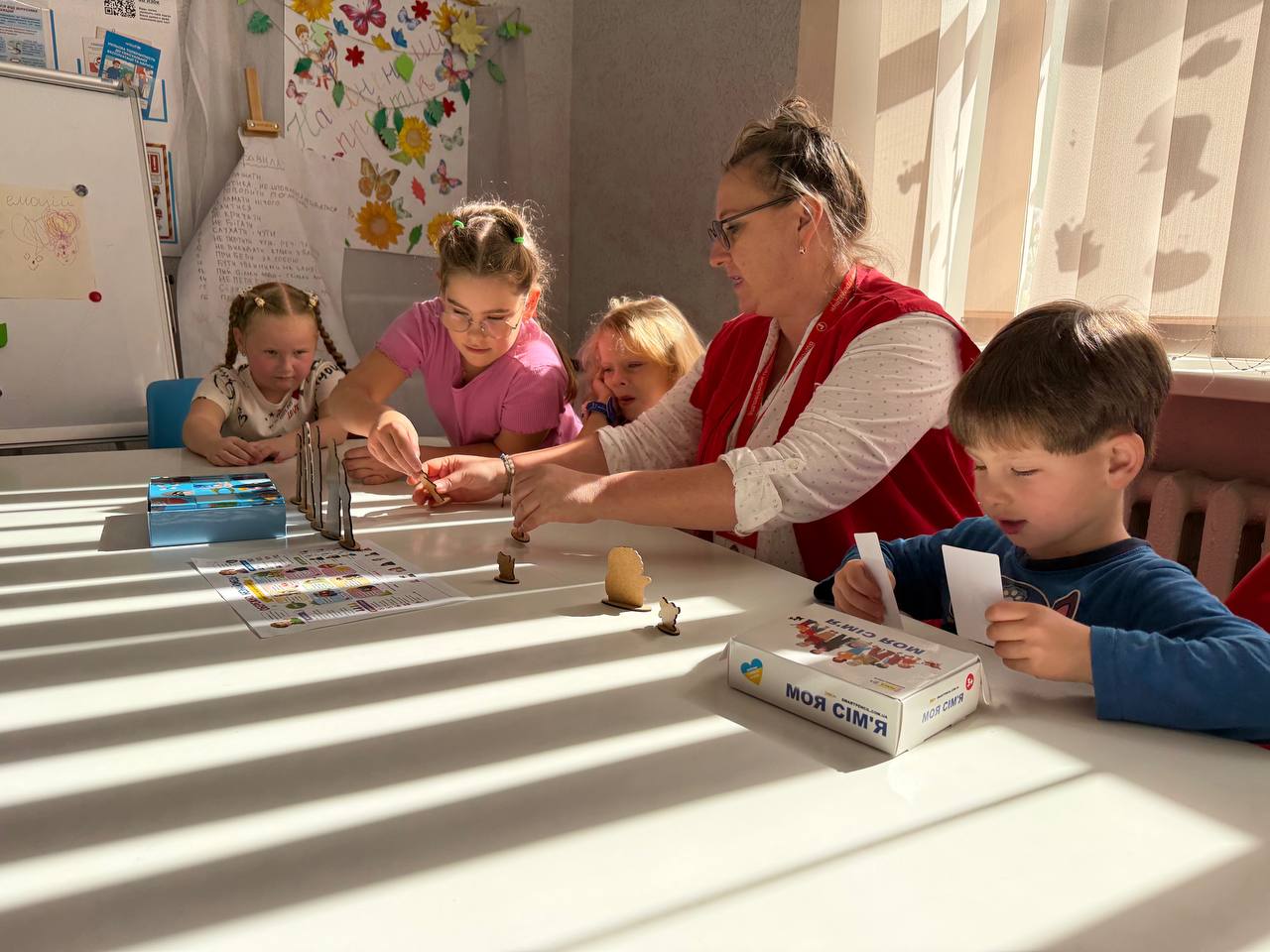 Through Play, We Talk About What Matters: How Children Learn to Talk About Safety and Preventing GBV
Specialists from the NGO Responsible Citizens conduct prevention and educational sessions for children and adolescents in Child-Friendly Spaces and educational institutions. The topics of the sessions vary and are selected according to the children’s age and needs. They include safe communication, personal boundaries, mutual respect, rules of behaviour in different situations, and preventing gender-based violence.
-
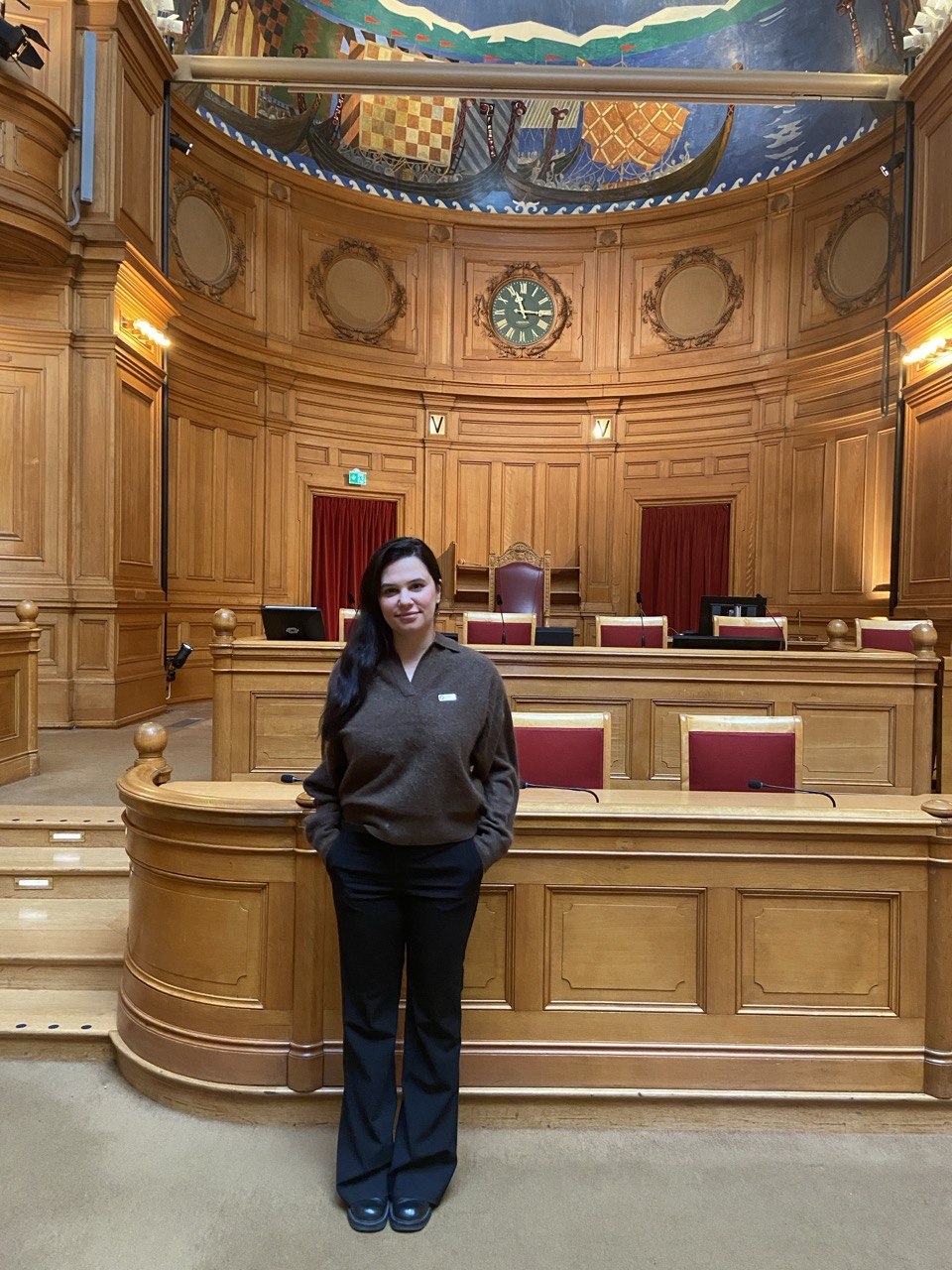 Olga Kosse at the Swedish Parliament: psychological support for children is about Ukraine’s future
The event was initiated by our steadfast partners at Rädda Barnen / Save the Children Sweden, who have consistently supported child protection and humanitarian response efforts in Ukraine over the years. Among the participants were members of the Swedish Parliament working on international development, human rights, and child protection issues: Gudrun Brunegård, Azra Muranovic, Carina Ödebrink and Marie-Louise Hänel Sandström.
-
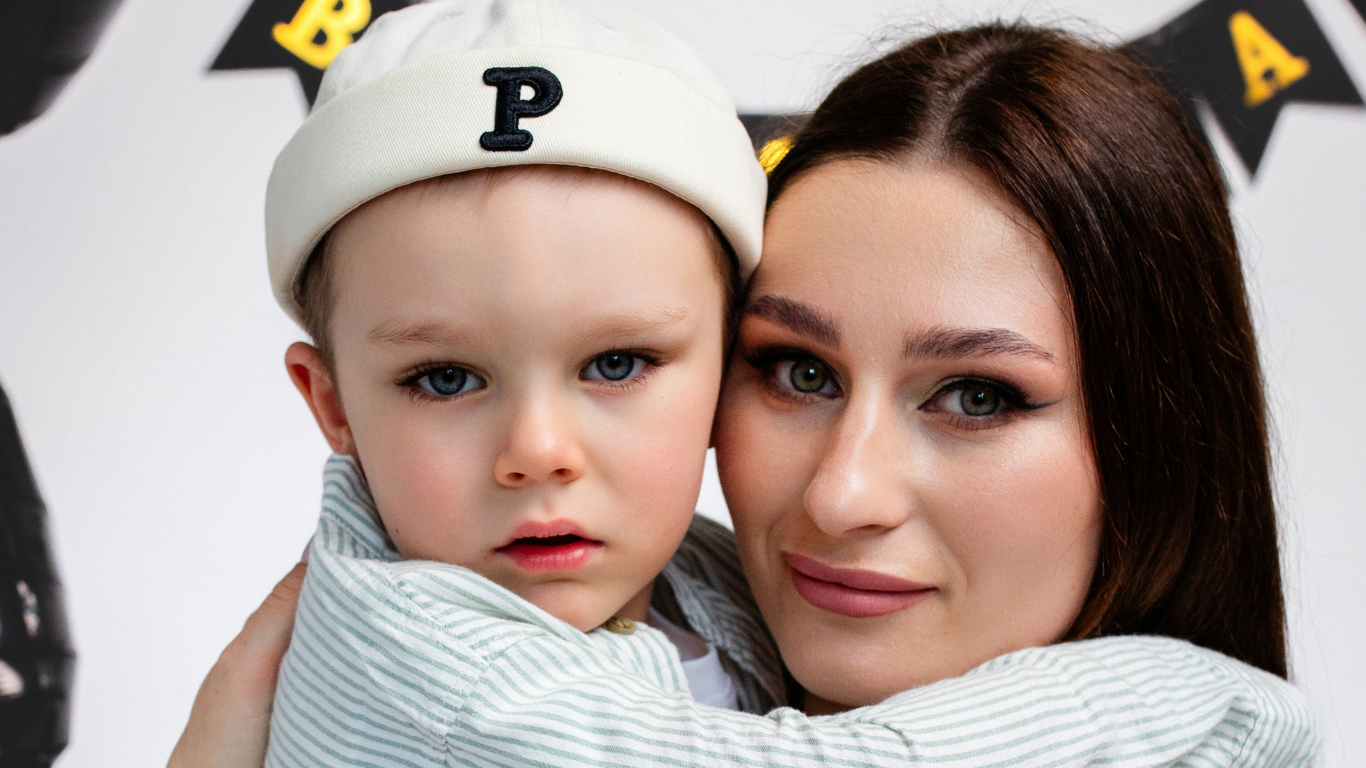 “The Most Important Thing Is Knowing There Are People Who Will Help.” Kristina’s Story of Finding Support for Her Family After Forced Displacement
“When you move to a new city, it’s very difficult to figure out where to turn for help. You don’t know where to find the right doctor or specialist. A friend recommended that I contact your organization, and I’m very grateful to her,” recalls 29-year-old Kristina, who was forced to leave Velyka Pysarivka in Sumy Oblast with her two children a year ago because of constant shelling.
-
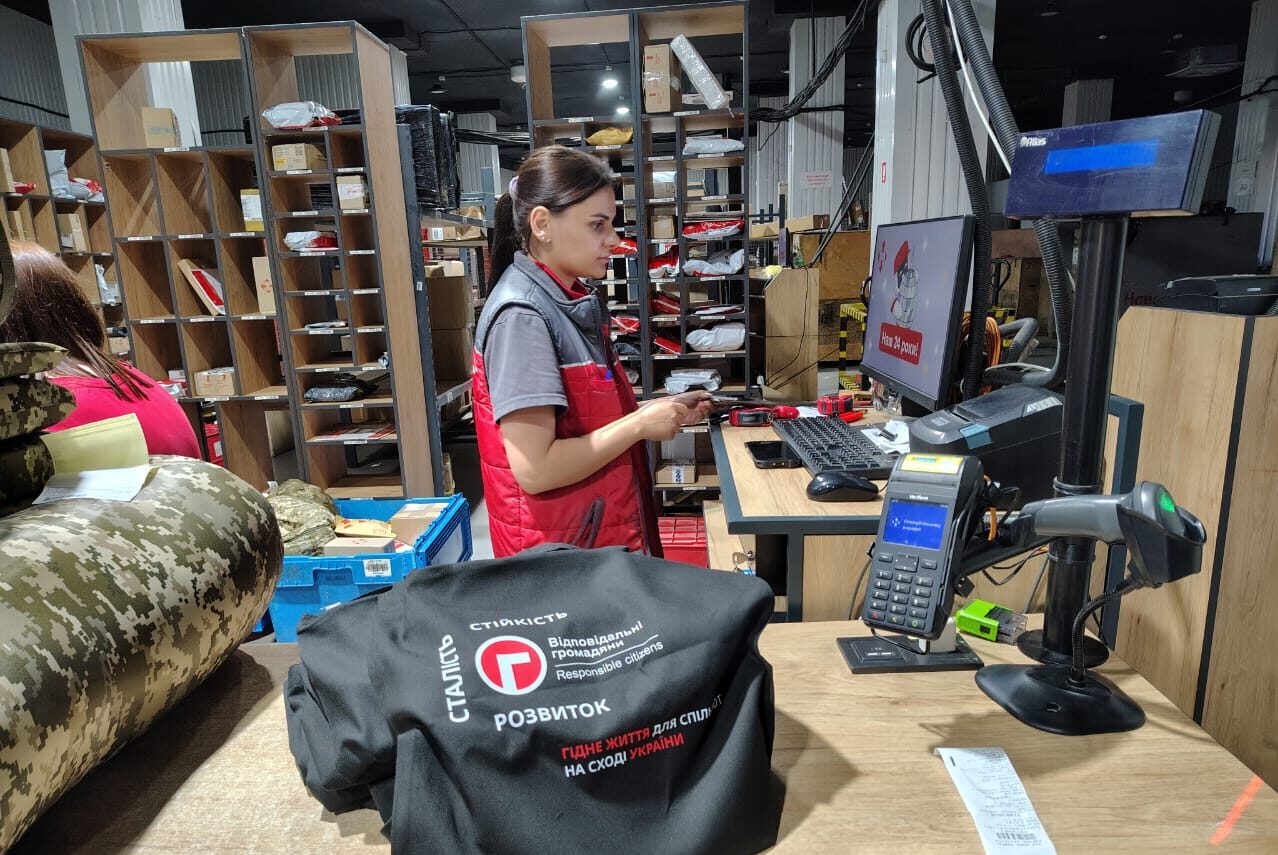 115 kg of Humanitarian Aid for Children in Lozova, Kharkiv Region
NGO Responsible Citizens, together with Humanitarian Nova Poshta, delivered humanitarian aid to the Transit Center in Lozova, Kharkiv region. The aid consisted of kits for psychological support and child development for children forced to leave their homes.
-
 Reflection session for the team implementing cash assistance project in eastern Ukraine held in Kyiv
A reflection session was recently held in Kyiv for the team working on the implementation of the cash assistance project in Eastern Ukraine. This event brought together specialists from Kharkiv, Dnipropetrovsk, and Donetsk regions. The meeting was essential to analyze the results of the past year's work, discuss challenges, and achievements.
-

-
 The Selection Committee Selected Projects to Receive Mini-Grants in Communities of the Kharkiv Region
The project is implemented by the NGO Responsible Citizens in partnership with JERU – Joint Emergency Response in Ukraine (Welthungerhilfe and Concern Worldwide) with financial support from the United Nations Office for the Coordination of Humanitarian Affairs (OCHA).
-
 Evacuation, Care, New Beginnings: A Donetsk Family Builds a Future with NGO Support
In the spring of 2025, they became participants in the program "Local, Inclusive, and Comprehensive Emergency Assistance to the Population Affected by the War in Ukraine," implemented by the NGO "Responsible Citizens" in partnership with Mercy Corps and with financial support from the UK Government.