
How Residents of Frontline Communities Assess their Readiness for a Possible Escalation
Our team conducted anonymous surveys on social media to better understand how prepared people from communities near the front line are for a potential escalation. More than 720 people took part.
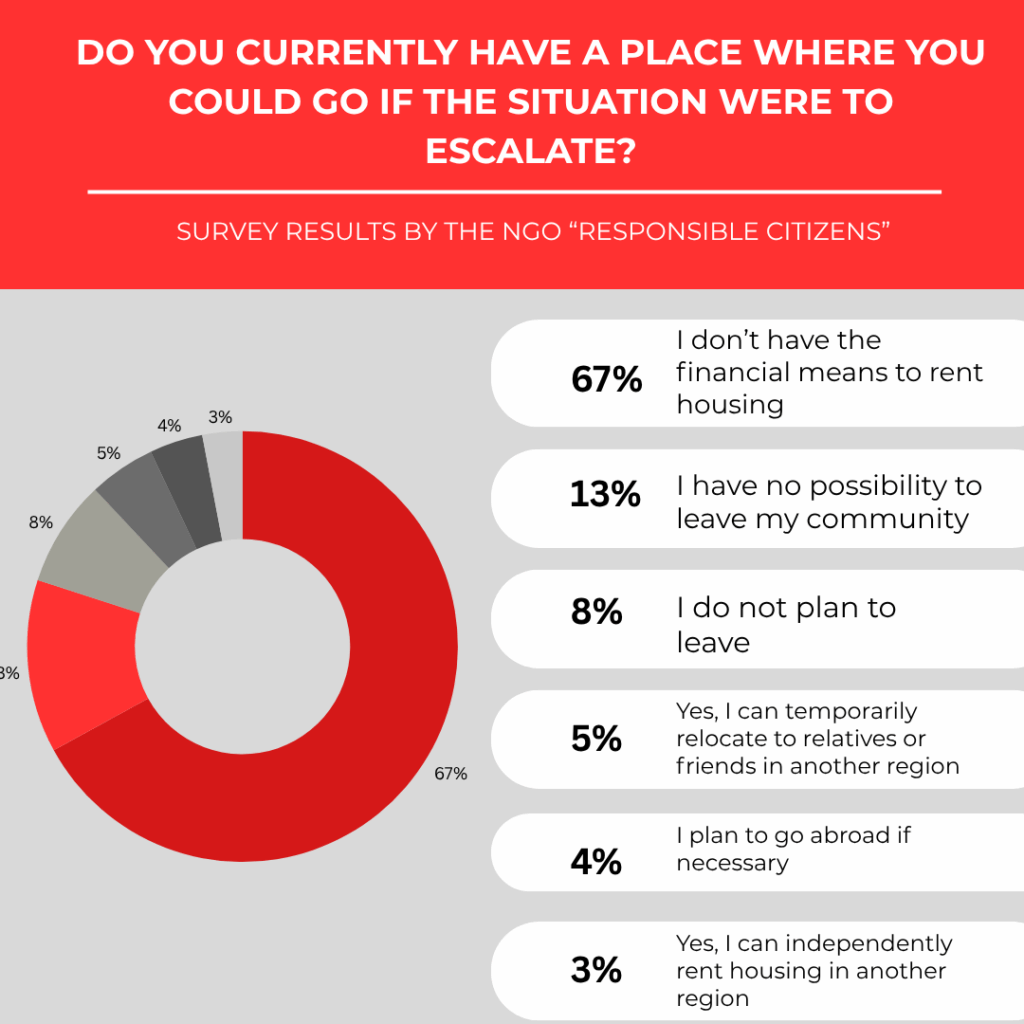
According to the survey results, 67% of respondents said they do not have the financial means to rent housing in case of evacuation.
13% stated they are unable to leave their community, while 8% said they do not plan to leave even if the situation worsens.
Only 12% of respondents have options for temporary relocation: 5% could move to relatives or friends in another region, 3% are able to rent housing independently, and 4% plan to go abroad if necessary.
“These results indicate the high vulnerability of people living in areas close to the front line.
They also show that for many, evacuation is not a matter of choice but of opportunity. That is why it is important to develop local support networks, strengthen public awareness, and create conditions that help people feel they are not abandoned, even in the most difficult times,” — said Olga Kosse, Head of the Board of the NGO Responsible Citizens.
Responsible Citizens continues to conduct ongoing monitoring of the needs of frontline territories, including through citizen surveys, to plan assistance in a timely manner for those who need it most.
Більше новин
-
 Supporting resilience in frontline communities of Donetsk Region
Despite constant shelling threats and a volatile security situation, eight mobile psychosocial support teams in Donetsk region provide daily assistance to children and their families. Specialists in psychology, speech therapy, and social work operate in communities where access to basic services is limited or entirely absent.
-
 Skills for the future: supporting educators in Kharkiv
The NGO “Responsible Citizens,” in collaboration with the Kharkiv Humanitarian and Pedagogical Academy, conducted a training session titled “Skills for Success in Life and Career” for educators from Kharkiv’s educational institutions.
-
 Career development training enrollment open
The NGO “Responsible Citizens,” in partnership with Mercy Corps and with support from the UK government, is offering opportunities for those seeking new...
-
 The team of Responsible Citizens NGO consistently develops partnerships and collaboration in frontline regions
Head of the board of Responsible Citizens NGO, Olga Kosse, conducted a monitoring visit to Kharkiv region to assess community needs together with local partners, including those communities hosting internally displaced persons, and to determine further priorities for supporting people.
-
 Accessibility week: Building a world of equal opportunities together
For the NGO Responsible Citizens, accessibility is not just a slogan — it’s a guiding principle we bring to life every day through our work with children, families, and communities.
-
 Strengthening Communities and Supporting Children in Zaporizhzhia Region
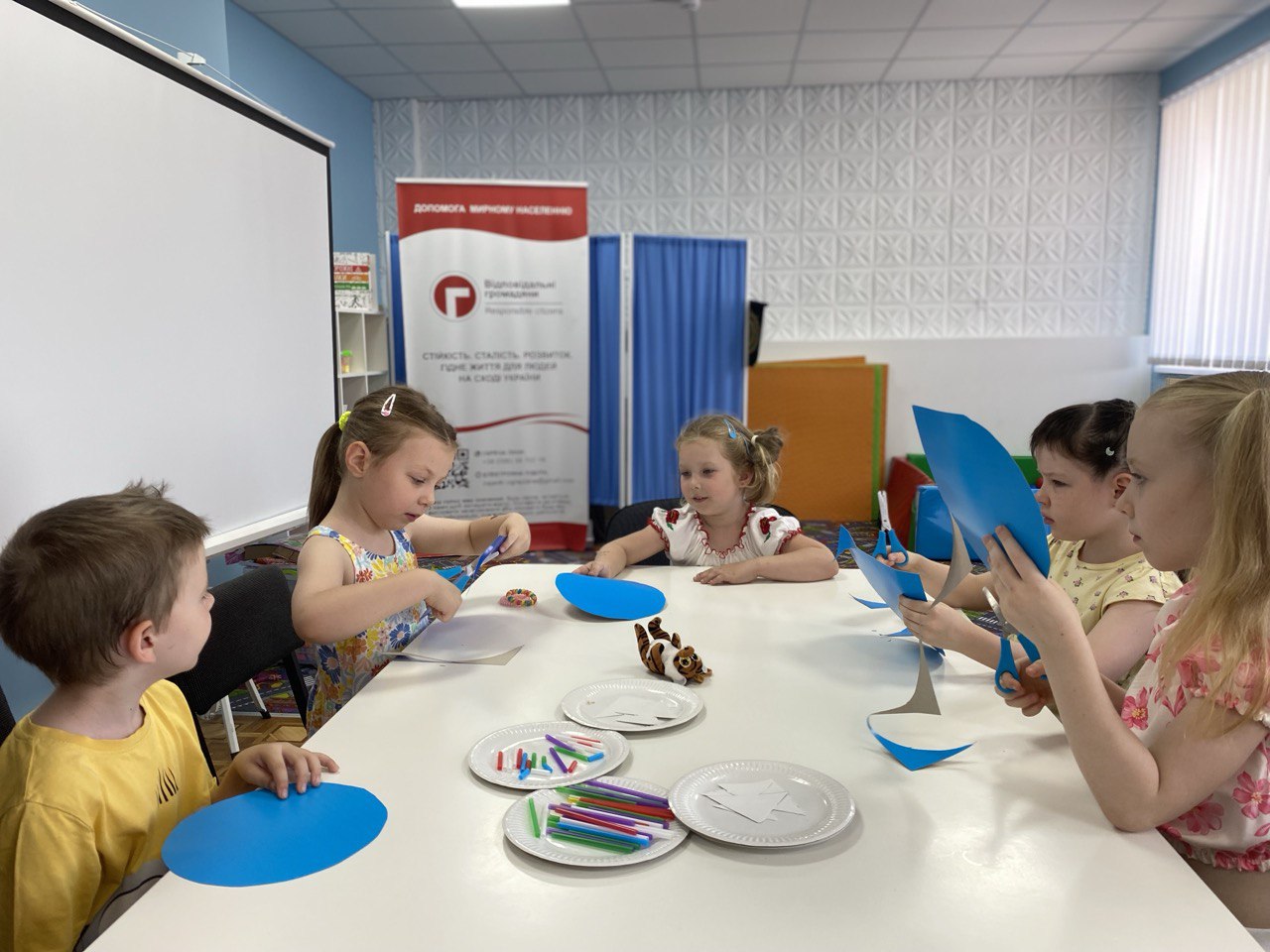
NGO Responsible Citizens, in partnership with UNICEF and with the support of the U.S. Government, is implementing the project “Strengthening Community Capacity to Provide Core Protection and Resilience Services in Kharkiv, Donetsk, Dnipropetrovsk, and Zaporizhzhia Regions”.
-
 Psychological support for families with children: the experience of Zaporizhzhia
In collaboration with the Zaporizhzhia City Center for Social Services, the psychologists of the NGO “Responsible Citizens” are conducting comprehensive...
-
 Registration for Cash Assistance Continues in Pavlohrad and Zaporizhzhia
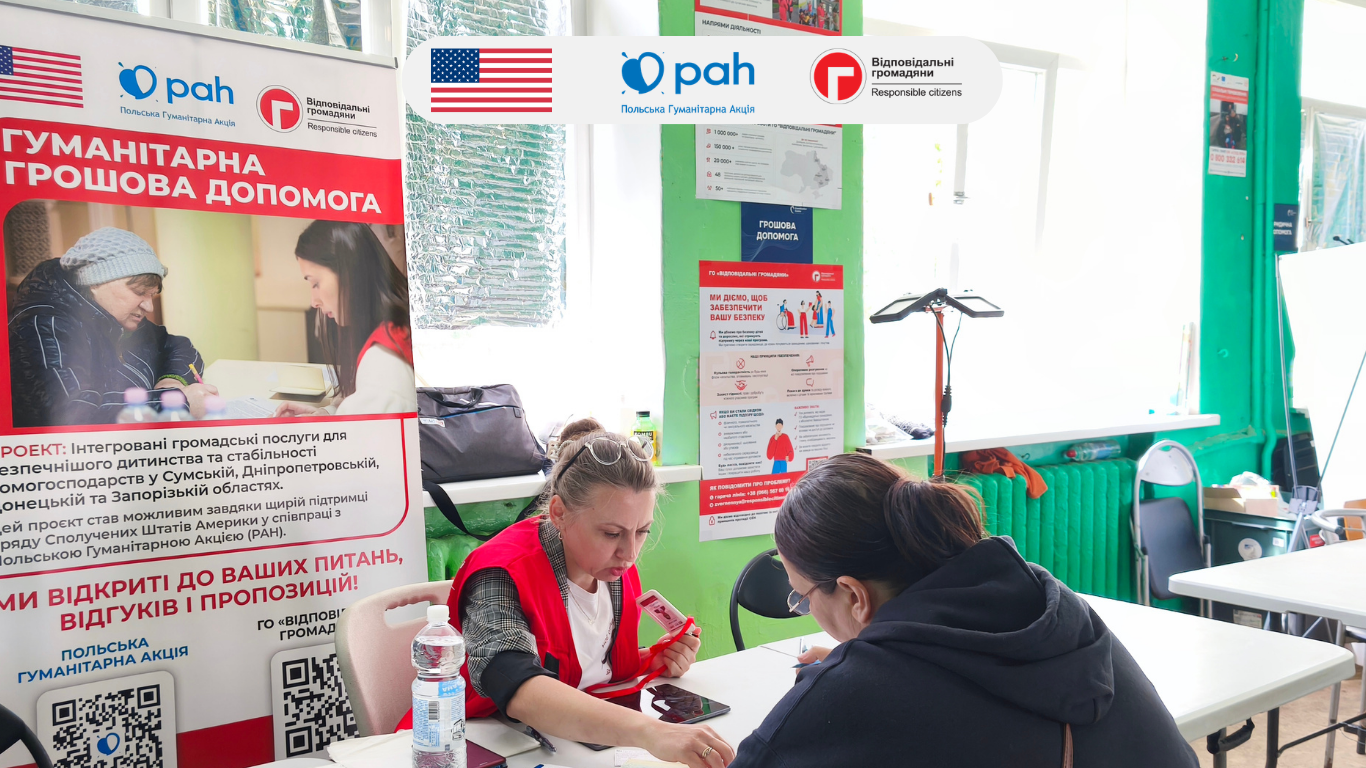
The escalation of hostilities and the intensification of evacuation efforts are leading to a sharp increase in the need for humanitarian assistance. During such periods, the team of the NGO Responsible Citizens ensures the uninterrupted registration of people for humanitarian cash assistance at the transit centres in Pavlohrad and Zaporizhzhia.