
“I Still Can’t Tell Myself, ‘That’s It, Let’s Move On’”: Victoria’s Story from Toretsk
Before the full-scale invasion, Victoria lived in Toretsk, Donetsk Oblast. She worked as a school psychologist and raised her son together with her husband. After 2014, the city lived alongside the war. Despite the constant danger, people tried to maintain their usual routines.
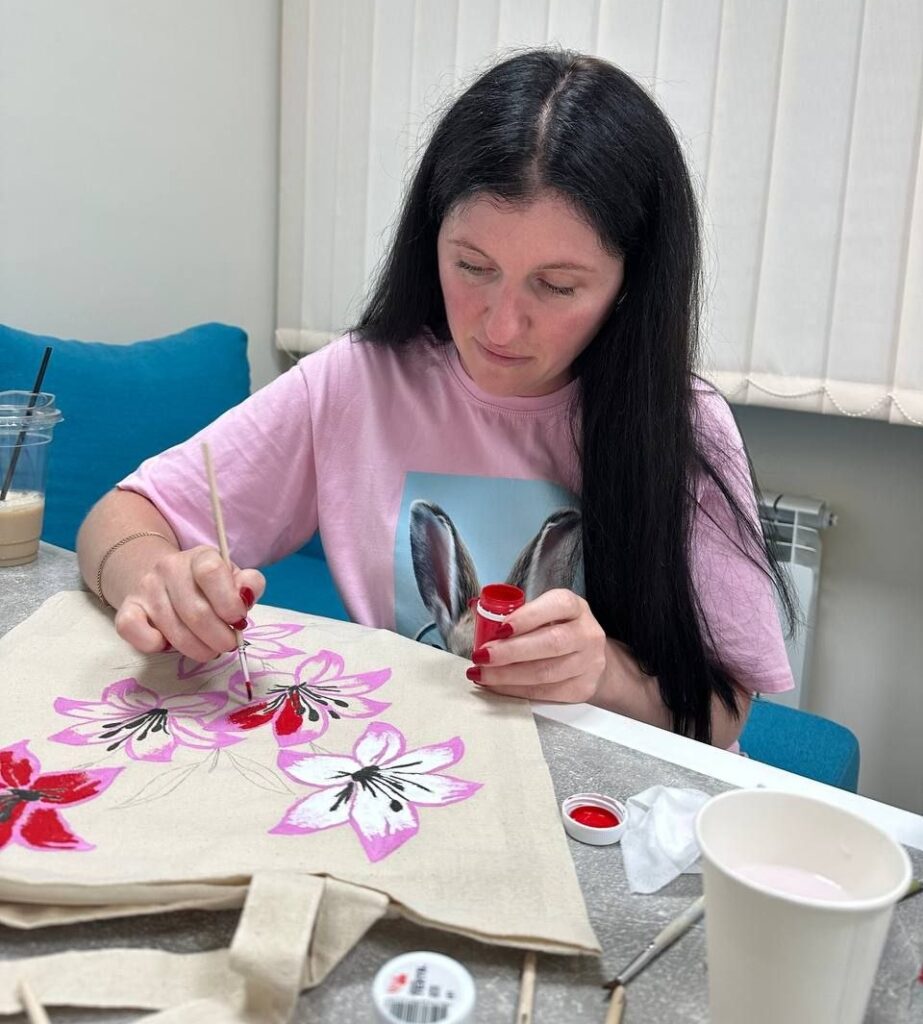
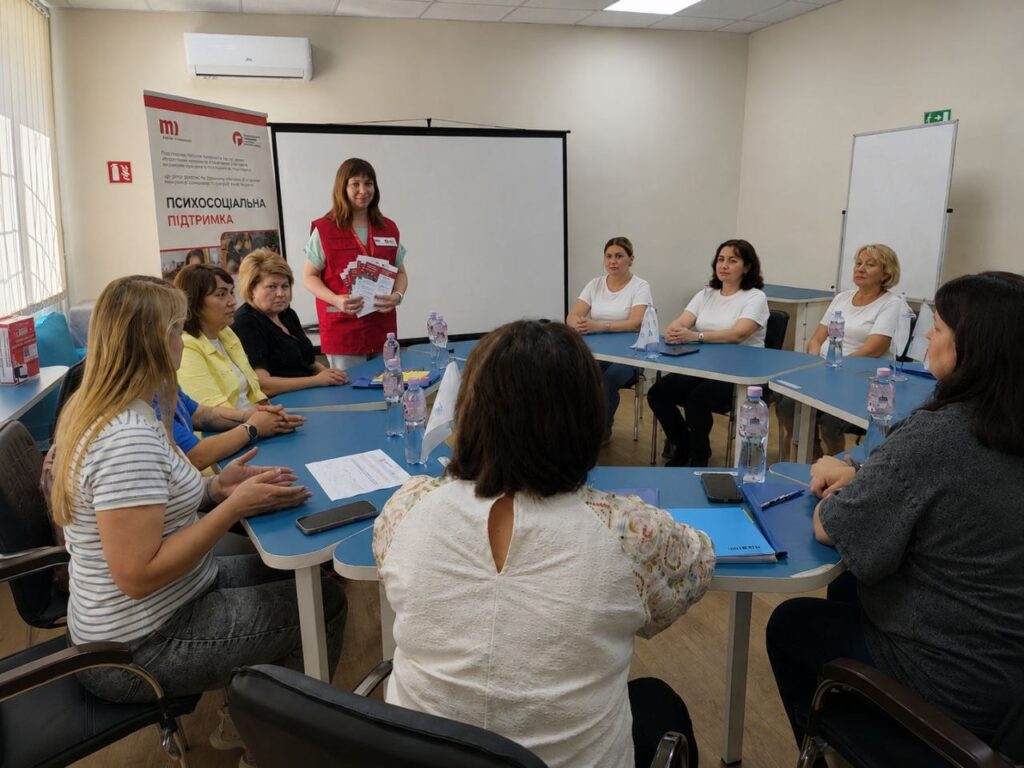
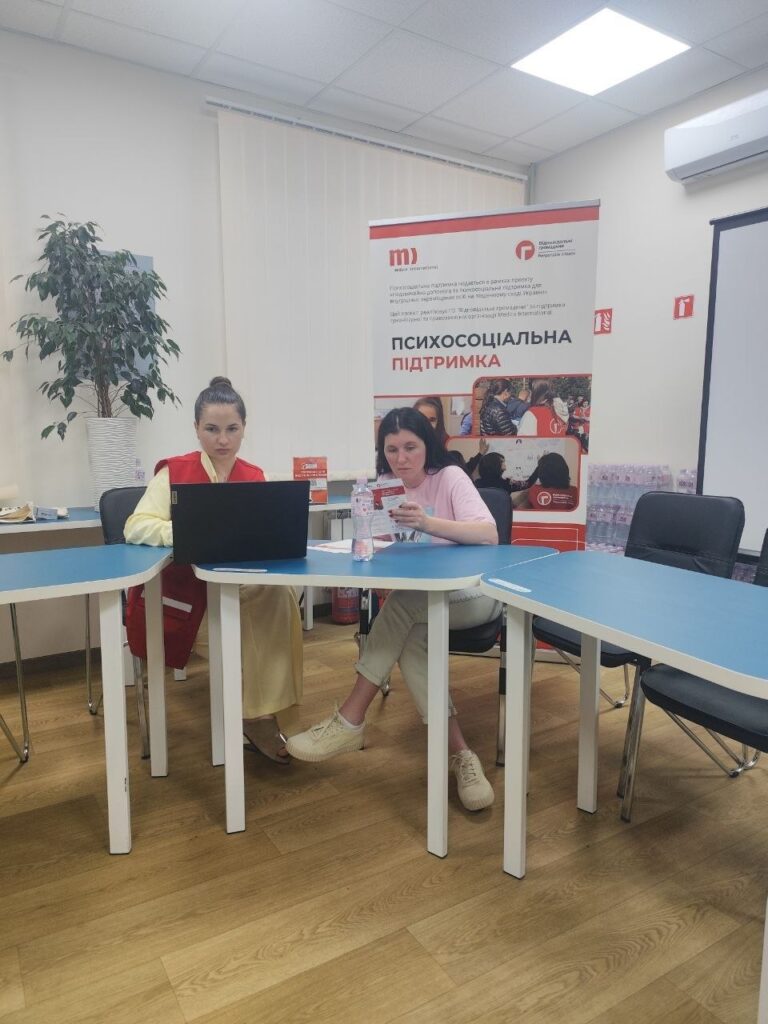
“Back then, we could still live and work there. My husband joined the defense of Ukraine and has been defending the country for eleven years now. It was dangerous, but there weren’t such massive attacks. Our house was still standing, the school was open, and it seemed like life was going on,” Victoria recalls.
In 2022, the situation changed dramatically. The front line was rapidly approaching, and the city came under constant shelling. Victoria left for Latvia with her son as part of an organized evacuation of children from the educational institution. At the time, everyone believed it would only be temporary.
“We were told that we would have shelter until the war was over. But back then, no one understood what ‘until the war was over’ meant. A week? A month? A year? As time went by, we missed our home, our loved ones, and our familiar life more and more.”
After several years abroad, Victoria made the difficult decision to return to Ukraine. By then, her home in Toretsk had been completely destroyed, and the city itself remained an active combat zone. The family faced a new question: where to start their lives over again. Kyiv offered more opportunities, but staying in the capital was too difficult both financially and emotionally. Eventually, the family moved to the Tsarychanska community in Dnipropetrovsk Oblast, where several generations of the family now rent a house together — Victoria and her son, her parents, sister, parents-in-law, and grandmother.
“We returned to Ukraine, and now we live as a large extended family. We support one another a lot, but this is a completely different life. Back home, everything was ours — the walls, the furniture, even my favorite cup. They may seem like small things, but those are exactly the things I miss the most. The hardest part is realizing that everything you worked for over the years is gone, and now you have to start all over again,” the woman says.
In 2024, Victoria was laid off. She lost her job while abroad and was unable to return to her profession immediately. After relocating to the Tsarychanska community, she began looking for a new job. It was then that she learned about a project run by the NGO Responsible Citizens.
Despite her many years of experience as a psychologist, she admits that she also needed support herself.
“I’m a psychologist, but that doesn’t mean I don’t need help. Everyone needs someone to lean on. First and foremost, they supported me emotionally. That was very important to me at that point.”
After regaining her emotional strength, Victoria was later helped by project specialists to find a job at a local educational institution. Although the salary is still modest, the job has become an important step toward restoring stability and confidence in the future.
In addition, as part of the project, Victoria received a voucher to purchase essential goods. Because of the constant uncertainty, she chose her purchases very carefully.
“The fear of having to evacuate again hasn’t gone away. When you don’t have a home of your own, you are constantly thinking that you may have to move again at any moment. So I chose only things that were truly necessary and that I could take with me if needed,” Victoria says.
Another important component of the support was a consultation with a lawyer on preparing documents related to her destroyed home.
“It’s very difficult to figure everything out on your own. Private consultations are expensive, and general information online doesn’t answer the questions specific to your situation. They explained everything to me in detail: which documents I needed, where to apply, and what to do next. After the consultation, I felt much calmer.”
Despite her new life, Victoria’s heart still returns to Toretsk.
“My whole life was there. I remember drinking coffee with my neighbor by the flower garden every evening, my son riding his bicycle with his friends and going to football practice. Every Friday, we would wait for my husband, cook something delicious, and watch movies together. Those were ordinary days, but they are exactly what I miss the most today. I’m getting to know people in the new community, but I still can’t tell myself, ‘That’s it, now we move on.’ We have learned to celebrate small victories. We wake up in the morning, alive — and we are already grateful for that. Today, our life is made up of these small steps.”
Looking back, Victoria says she no longer expected to receive any assistance:
“I understand that the war is ongoing, resources are limited, and it is impossible to help everyone. That’s why I was genuinely surprised that the project took such a comprehensive approach to supporting me. Psychological support, a legal consultation, a voucher for essential purchases, and even help with finding a job — all of this gave me the feeling that I wasn’t left alone with my problems. Sometimes, this kind of support is exactly what helps you believe again that life can gradually be rebuilt.”
The assistance is provided as part of a project implemented by the NGO “Responsible Citizens” with the support of the humanitarian and human rights organization Medico International.
Більше новин
-
 Announcement for Residents of the Hrunska Community, Okhtyrka District, Sumy Region
Pre-registration has begun for participation in the multi-purpose cash assistance program, implemented by the NGO “Responsible Citizens” in partnership with JERU (a joint initiative of international organizations Welthungerhilfe and Concern Worldwide), funded by the German Federal Foreign Office (AA).
-
 NGO “Responsible Citizens” joined the development of the regional child protection strategy
A meeting of experts took place in Kharkiv to discuss and plan the Strategy for Ensuring Every Child’s Right to Grow Up in a Family Environment for 2025–2028.
-
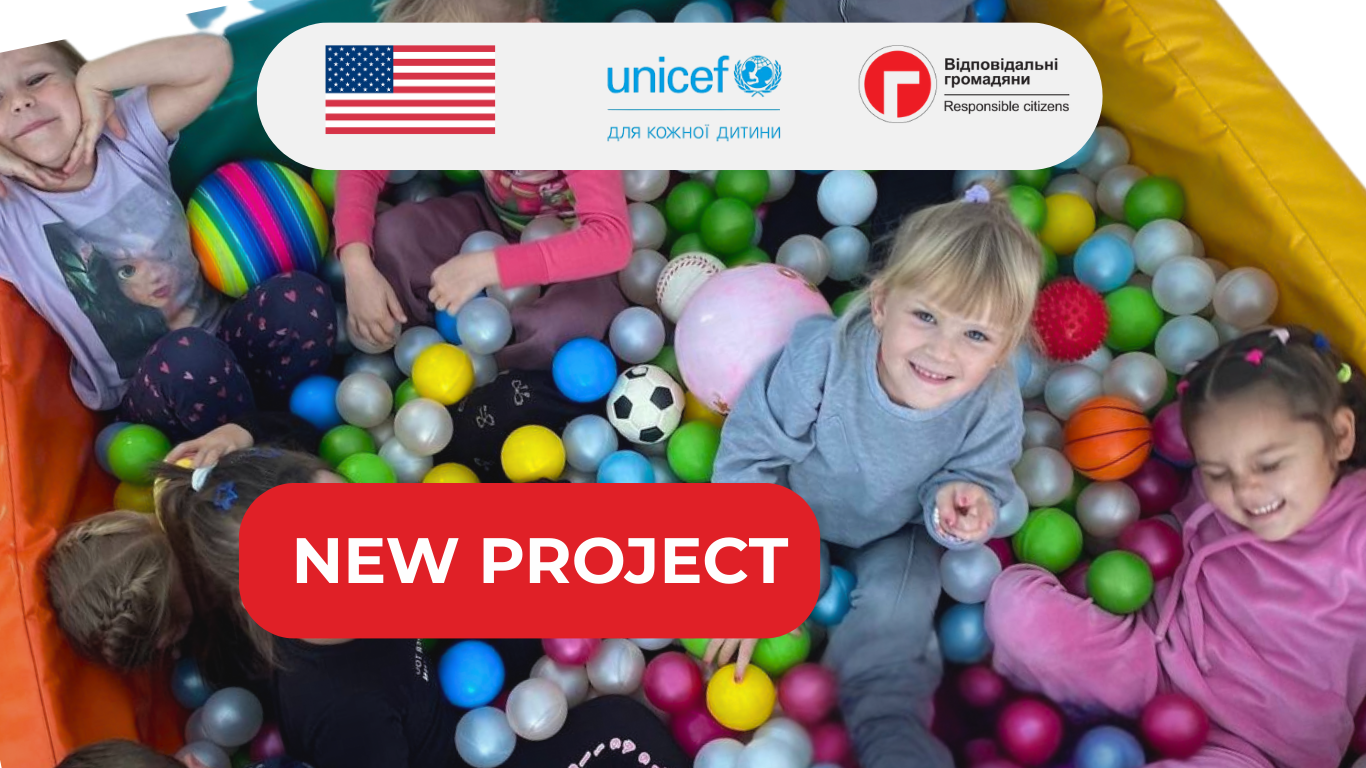 A new UNICEF project has launched to support children and parents in three frontline communities
From now on, such support will be available within the framework of the UNICEF project “Protection Services for the Most Vulnerable Children and Parents (or Their Caregivers) in Communities of Donetsk, Dnipropetrovsk, and Zaporizhzhia Regions,” implemented by the NGO Responsible Citizens with financial support from the Government of the United States of America and UNICEF Ukraine.
-
 How training becomes the start of change: the story of Iryna from Dnipropetrovsk region
Iryna from Kryvyi Rih has been connected to art her entire life. Teaching painting and helping people through creativity is her true calling. For over 30 years, she has been teaching others to see the world through colors, lines, and images. Today, she works at a music school in her hometown, but more and more often, she feels the need to grow, move forward, and discover new opportunities.
-
 Strengthening expertise in the field of protection from sexual exploitation and abuse (PSEA)
Oksana Ivatina, Project Coordinator of the NGO “Responsible Citizens,” completed a Training of Trainers on the prevention of sexual exploitation and abuse (PSEA).
-
 Responsible Citizens NGO Completes Annual Humanitarian Aid Project Supported by the UK Government
In partnership with Mercy Corps Ukraine, the organization implemented the LIVES Extension project, through which more than 23,000 people in Donetsk, Dnipropetrovsk, Kharkiv and Zaporizhzhia regions received financial support to cover basic needs.
-
 Skills for the future: supporting educators in Kharkiv
The NGO “Responsible Citizens,” in collaboration with the Kharkiv Humanitarian and Pedagogical Academy, conducted a training session titled “Skills for Success in Life and Career” for educators from Kharkiv’s educational institutions.
-
 The work of specialists in Barvinkove: The power of collective effort
“Cats and dogs are now more than just pets – they try to assist us in our work and do everything possible to help people navigate through challenges,” shares Marina...