
A working meeting held in the Shevchenkivska community as part of the mini-grant competition for initiative groups in Kharkiv region
During the field visit, we spoke with active community members who are already forming initiative groups and developing ideas aimed at addressing the community’s basic needs.
Such sessions are an essential part of the program — they help establish direct communication with residents, understand their requests, clarify local needs, and support groups in preparing realistic and effective initiatives.
During the meeting, we provided a detailed explanation of the group cash transfer mechanism, participation criteria, project requirements, and evaluation criteria. We also emphasized the importance of having a clear implementation plan, covering at least 25 residents, addressing urgent needs, and avoiding any political or military orientation.
A reminder that the mini-grant competition is open to initiative groups from Zolochivska, Shevchenkivska, Vilkhuvatska, and Velykoburlutska communities. Groups must consist of at least five members and an identified leader, and be ready to implement the project within two months. The maximum funding amount is up to 160,000 UAH.
The pre-registration stage is open until 15 December 2025. You can submit your idea via the link:
https://ee-eu.kobotoolbox.org/x/5CPX1mZU
If your community is also interested in hosting an introductory session, please leave a request here:
https://forms.gle/uyahcbRQz2NDdWct8
The program is implemented by the NGO “Responsible Citizens” within the JERU partnership – Joint Emergency Response in Ukraine, a joint initiative of the international organizations Welthungerhilfe and Concern Worldwide, with financial support from UHF.


Більше новин
-
 Alla Maslakhova, Project Coordinator of NGO “Responsible Citizens,” in a Special Edition of the “SPIU Podcast
What does responsibility look like in practice? What are the current trends in the civic sector? How do we provide support in frontline areas, what lessons have we ...
-
 “Responsible Citizens” NGO joined the Forum on supporting Family-Based Child Care in Kryvyi Rih
The event became an important platform for discussing how every child can grow up in a caring family environment rather than under institutional care.
-
 Humanitarian System 2026: Fewer Resources, Greater Responsibility for Local Organisations
Olga Kosse, Chair of the Board of the NGO “Responsible Citizens”, took part in a series of advocacy meetings in London together with partners and colleagues from Ukrainian organisations.
-
 Let’s unite in the “16 Days Against Violence” campaign!
Every year, from November 25 to December 10, the world unites for the “16 Days Against Violence” campaign. This initiative holds special significance in...
-
 First training in 2025: Practical knowledge for effectively addressing individual needs
The NGO "Responsible Citizens" successfully conducted the first training of the year on the topic: "Meeting Individual Needs – From a Sense of Safety to Conflict Mitigation."
-
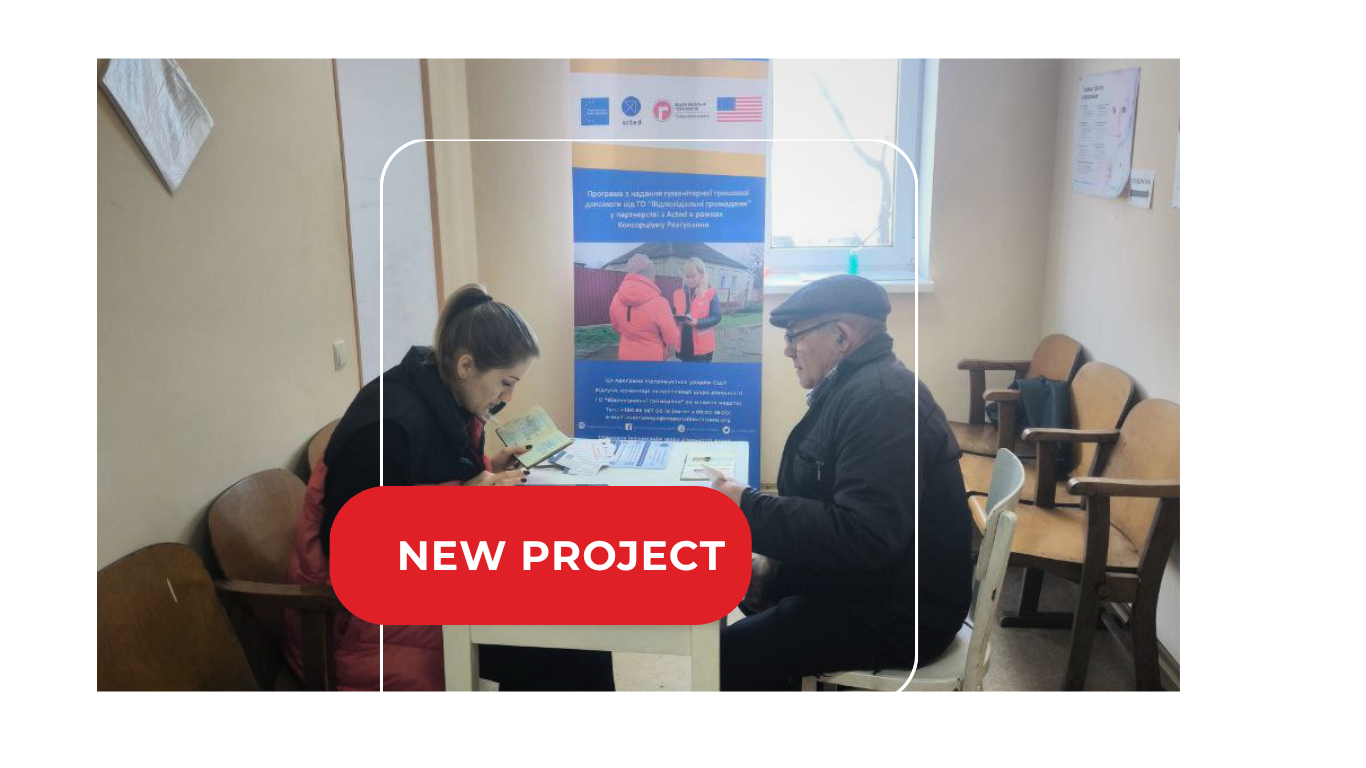 A cash assistance programme for war-affected families has been launched in three regions of Ukraine
In February 2026, Responsible Citizens NGO, in partnership with Acted and with the support of the US Government, launched a humanitarian cash assistance programme for families affected by the war in Kharkiv, Sumy, and Donetsk regions.
-
 Psychosocial Support for Children Affected by the War in Zaporizhzhia Oblast
The activities were carried out within the framework of the UNICEF project in Ukraine “Strengthening Community Capacity to Deliver Essential Protection and Resilience Services in Kharkiv, Donetsk, Dnipropetrovsk, and Zaporizhzhia Oblasts,” implemented by the NGO “Responsible Citizens” with the support of the Government of the United States of America.
-
 Building team capacity: A social work specialist from Barvinkove becomes a “Parenting Without Stress” programme trainer
The training was the first in a series of sessions organized within the framework of the “PORUCH” project in cooperation with UNICEF Ukraine and the All-Ukrainian Public Center “Volunteer.” Such inter-organizational collaboration strengthens the system of quality psychosocial support at the community level.