
How Psychosocial Support Operated in Donetsk Region in 2025
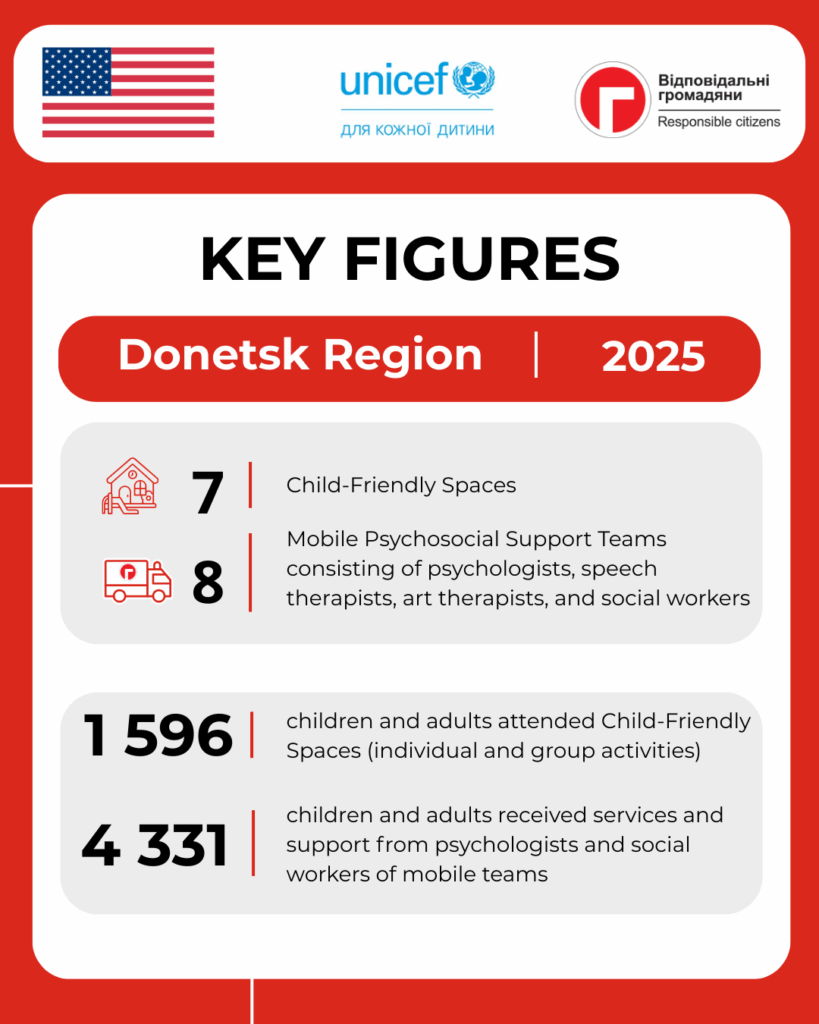
The year 2025 in Donetsk Region meant constant work in close proximity to the front line, frequent displacement, and high levels of psychological strain among both children and adults. In communities where stability was more the exception than the norm, Child-Friendly Spaces became places of safety, predictability, and support.
Within the framework of the partnership with UNICEF Ukraine, the team of the NGO “Responsible Citizens” worked both in the Spaces and through mobile psychosocial support teams. This format made it possible to respond quickly and flexibly—going to where needs arose suddenly due to evacuations, shelling, or new waves of displacement.
“Throughout the year, the work focused on stabilizing the emotional state of children, supporting parents, providing individual and group trauma-focused support, and developing stress-coping skills. For many families, this assistance became a critically important point of support amid daily uncertainty,” comments Oksana Ivatina, Project Coordinator in Donetsk Region.
The work was carried out within the framework of the UNICEF project in Ukraine “Strengthening Community Capacity to Deliver Essential Protection and Resilience Services in Kharkiv, Donetsk, Dnipropetrovsk, and Zaporizhzhia Regions,” which is implemented by the NGO “Responsible Citizens” with the support of the Government of the United States of America.
Більше новин
-
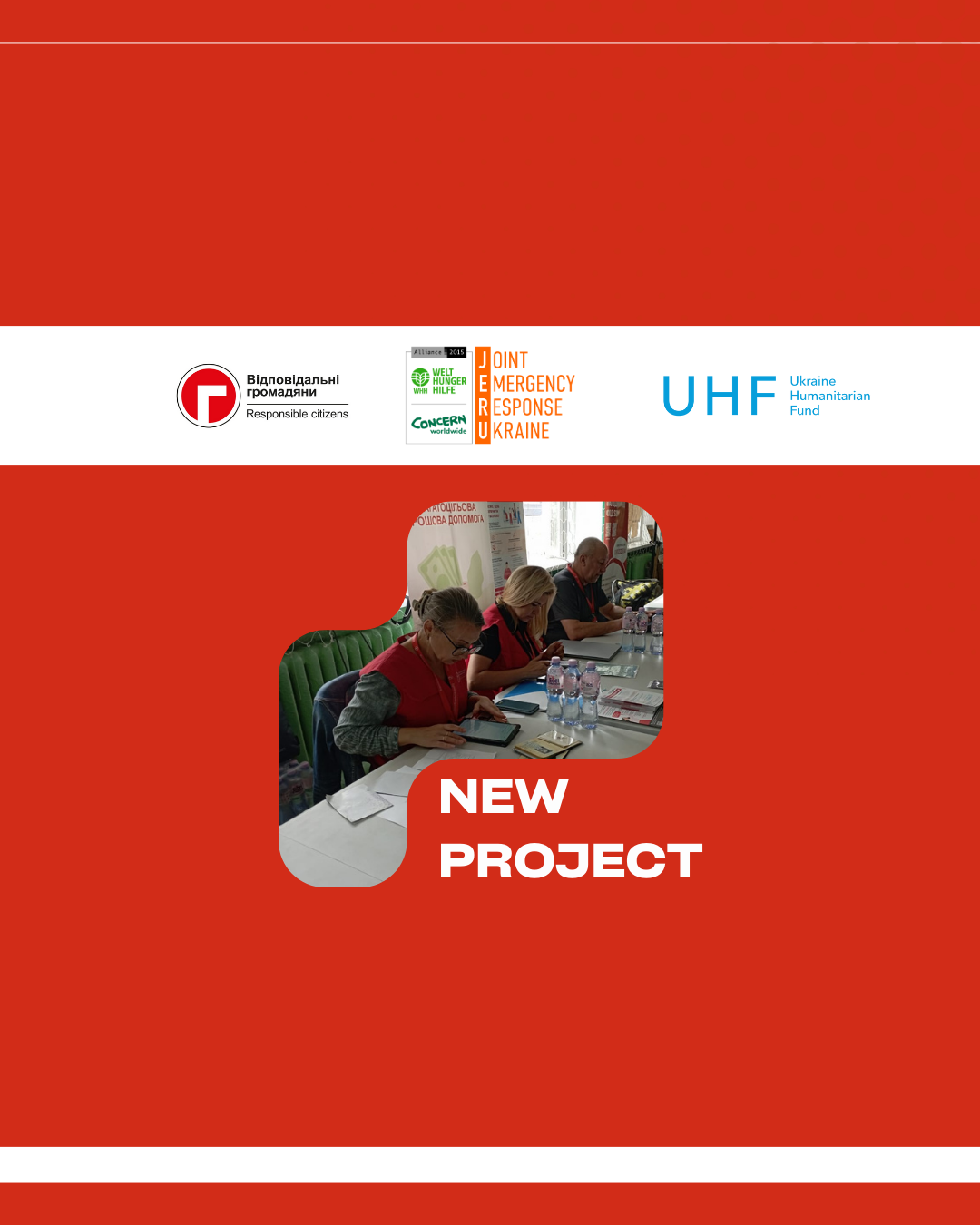 Assistance for War-Affected Communities in Kharkiv Region: Launch of a Joint Program with JERU Partners
Responsible Citizens NGO is launching a new project in partnership with JERU – a joint initiative of the international organizations Welthungerhilfe and Concern Worldwide. The project is funded by the UHF.
-
 Catch-Up classes launched
In partnership with the Government of the Faroe Islands, catch-up classes have been organized since September 2024 for children who have experienced educational los...
-
 NGO “Responsible Citizens” at the Regional Forum “Every Day for Children”
The Regional Forum “Every Day for Children” took place for the first time in Dnipro, bringing together over 250 participants — representatives of authorities, local governments, child protection services, international and civil society organizations, and law enforcement.
-
 Catching Up on educational losses in eastern Ukraine
Educational losses of children due to the war have become a challenge that the NGO “Responsible Citizens” started addressing last year. In the complex o...
-
 Law, psychology, employment: how we respond to people’s real needs
In a world where uncertainty has become the new normal, knowledge is confidence.Together with our partner Mercy Corps and with financial support from the UK governm...
-
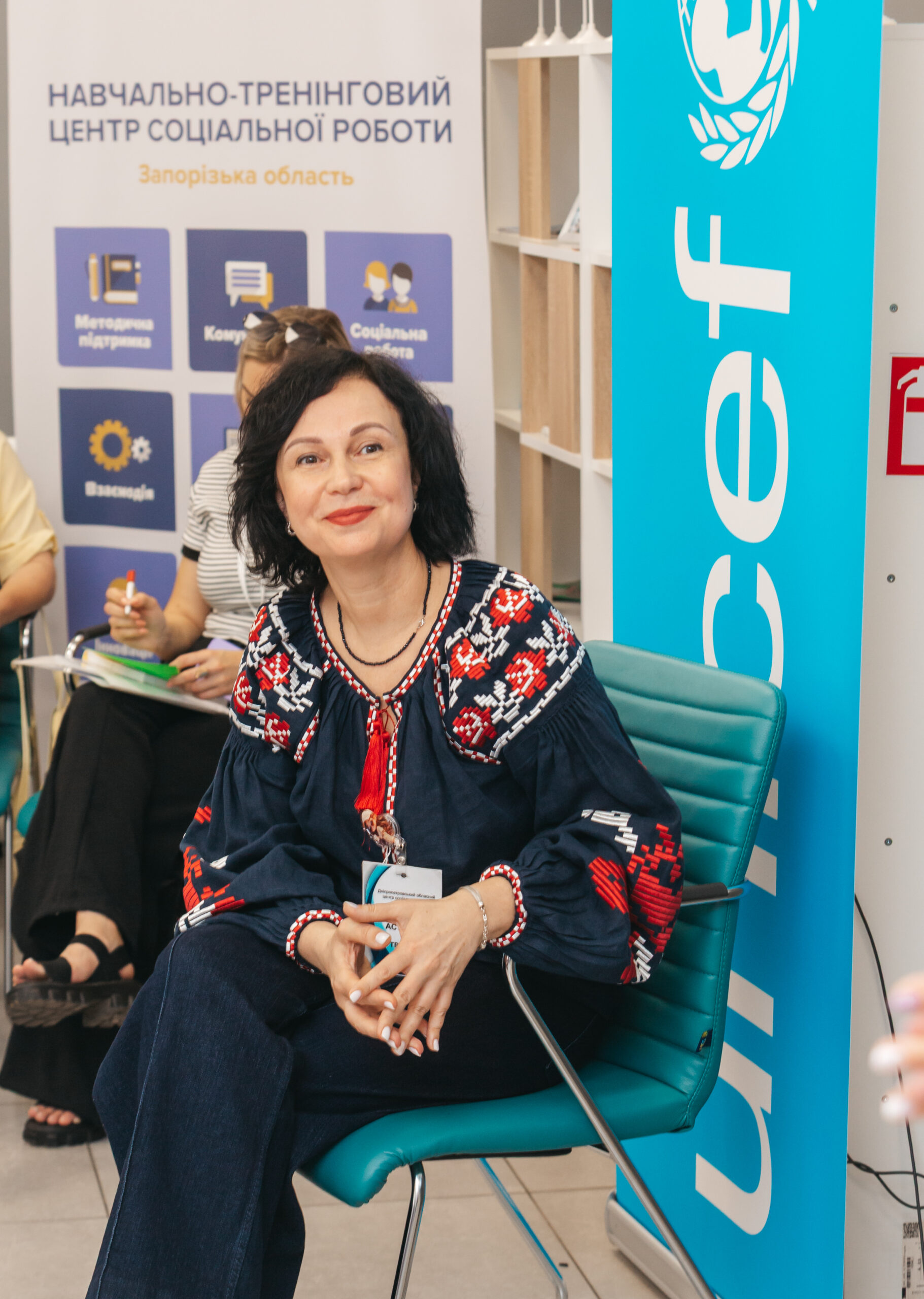 Social Services for Children and Families During the War: Training for Communities Held in Zaporizhzhia Oblast
The event was held within the framework of the UNICEF project “Protection Services for the Most Vulnerable Children and Parents (or Their Caregivers) in Communities of Donetsk, Dnipropetrovsk and Zaporizhzhia Oblasts”, implemented by Responsible Citizens NGO with the financial support of the United States Government and UNICEF.
-
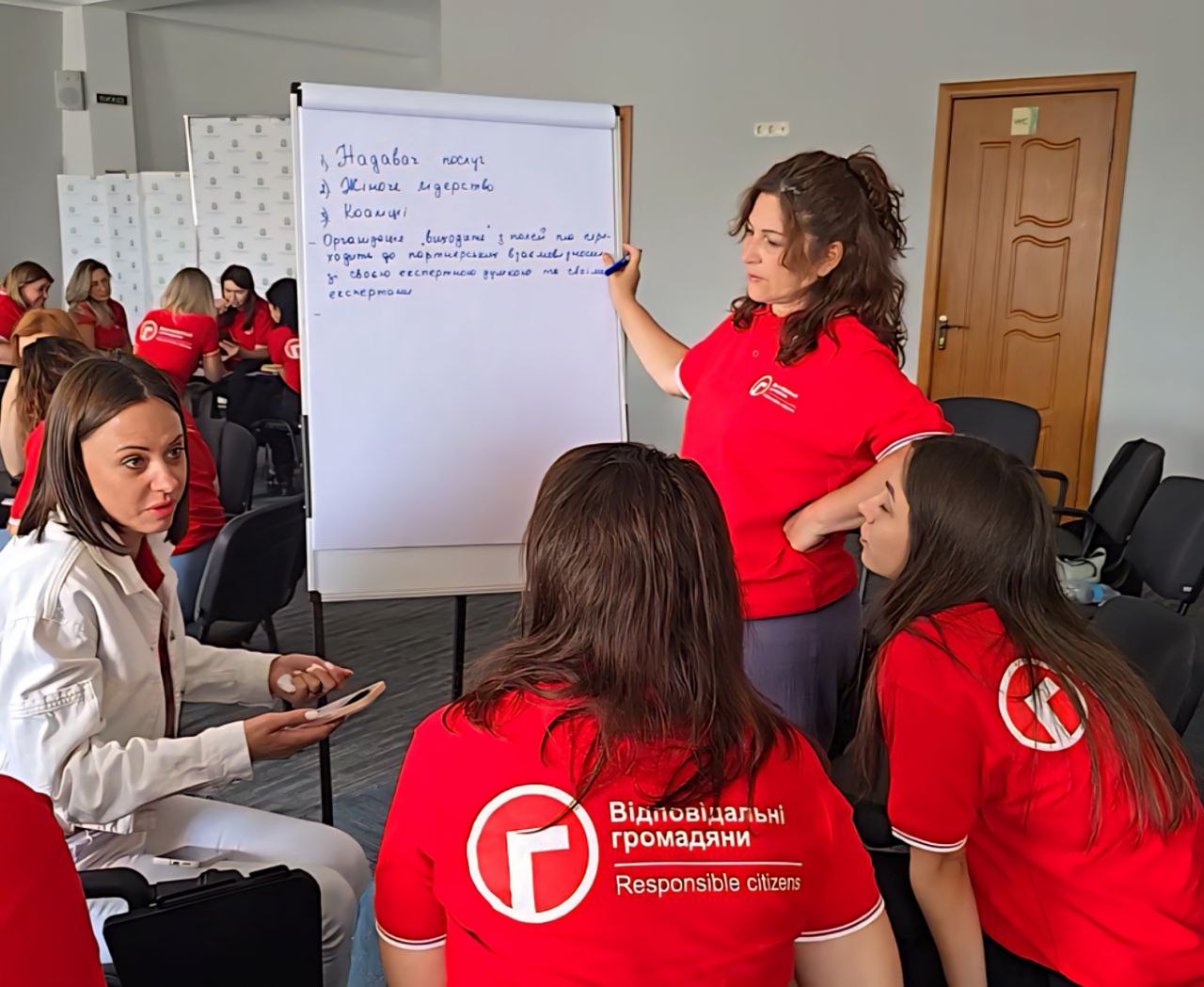 New Partnership to Strengthen Family Support in Kharkiv Region
“Responsible Citizens” NGO launches a new phase of activity within the framework of systemic family support. We are joining efforts with the “Unity for the Future” Charitable Foundation, with financial support from UHF (Humanitarian Fund for Ukraine), to implement the project “Comprehensive Multisectoral Assistance for Vulnerable Families in Kharkiv Region.”
-
 NGO Responsible Citizens surveyed 1,004 people in Donetsk region to assess displacement trends and humanitarian needs
NGO Responsible Citizens surveyed 1,004 people in Donetsk region to better understand the scale of displacement and current humanitarian needs. Such studies help to plan actions that address the challenges families face every day.